
We learned how greenhouse gases are causing a warming of the atmosphere by trapping more heat.
This increase in heat and greenhouse gas levels can cause changes on the Earth's surface and in the atmosphere.
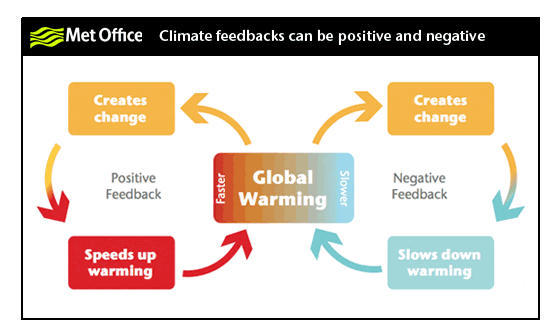
Some of these changes might increase the warming, while others might reduce the warming. These are called climate feedbacks.
Positive and Negative Feedback
A positive climate feedback (+) is something that increases warming. For example, when temperatures increase, more water will evaporate from rivers, lakes, and oceans. Warm air holds more water vapor, so more heat will be trapped. This increases the greenhouse effect.
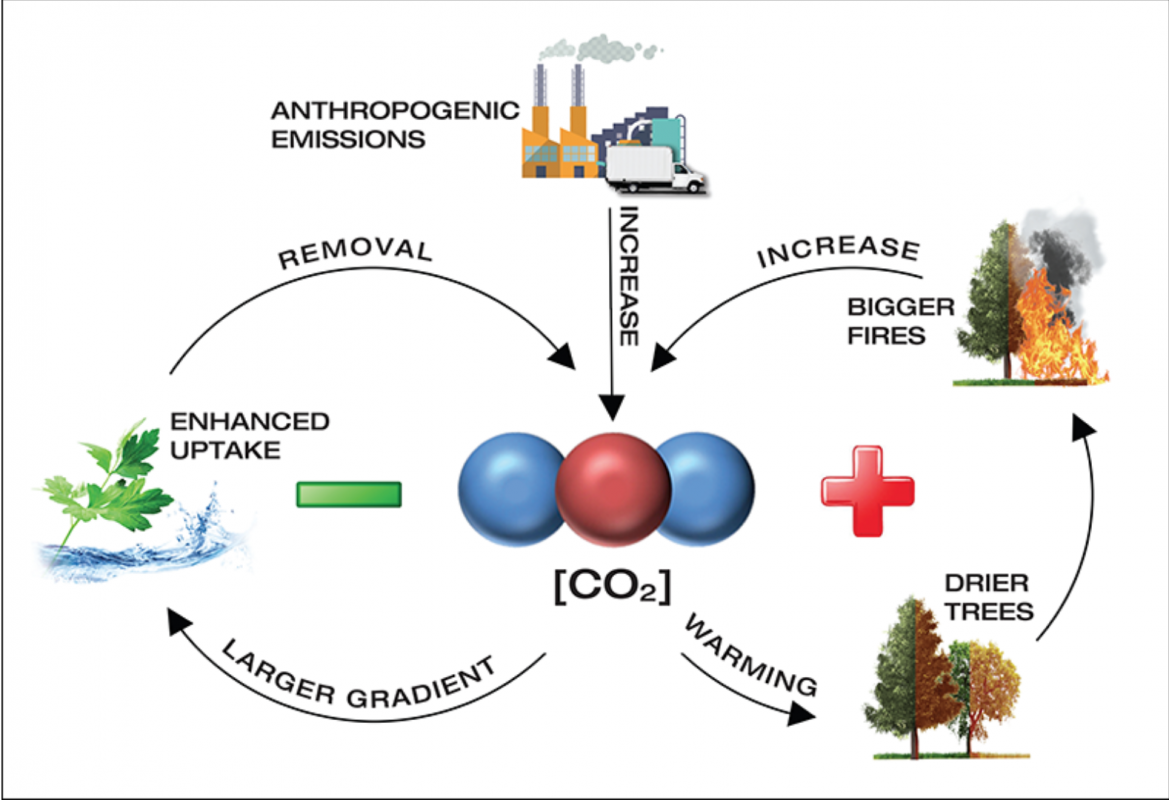
Hence, water vapor in the atmosphere is considered a positive climate feedback.
A negative ( -) climate feedback reduces the effect of warming. Experiments show that more CO₂ in the atmosphere would increase plant growth. These plants would pull more CO₂ from the atmosphere. This process is known as CO₂ fertilization. It can reduce warming and is considered a negative climate feedback.
However, CO₂ fertilization pulls only a very small amount of CO₂ that is added to the atmosphere by humans.
What Are Tipping Points?
It took nearly all of human history to reach the first one-billion population milestone by the year 1804. Did you know that in just 200 years, our world's population has grown from 1 billion to over 8 billion?
Our planet’s resources are stressed! With more people on Earth, we use more and more resources to feed and house them.
Unfortunately, climate change can worsen a growing crisis and lead to a tipping point.
A tipping point is when a small change causes a big, often irreversible shift. Think of a game of Jenga where pulling just one block causes the entire tower to collapse!
A tipping point in climate could create changes that cannot be reversed in human lifetimes.
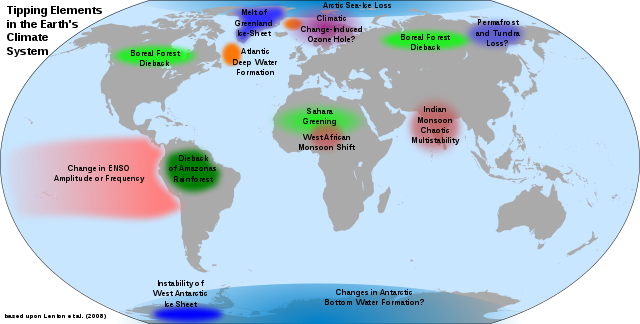
This can lead to things such as the disappearance of polar ice sheets, or the dieback of Amazon rainforests. What other tipping points do you see in the figure below?
Why Do They Matter?
It is important to understand that impacts are interconnected. For example, rising temperatures will increase the frequency and intensity of wildfires.
Wildfires affect human health, animal species, and ecosystems. They can also disrupt transportation systems and the flow of goods and services. This can affect the economy of a region.
Let’s start with the most visible impact of climate change: extreme weather.
Summary
- Positive climate feedbacks, such as water vapor, increase the effects of global warming.
- Negative climate feedbacks, such as carbon dioxide, decrease the effects of global warming -- but only up to a point.
- Tipping points are sudden and irreversible changes in an ecosystem that will take a long time to recover.
We learned in the previous section that greenhouse gases warm the planet by trapping more heat.
This rise in heat and greenhouse gas levels can cause changes on Earth's surface and in the atmosphere.
Some of these changes might lead to even more warming, while others might cool the planet. These are known as climate feedbacks.
Positive and Negative Feedback
Climate feedback is said to be positive (+) when it increases warming.
For example, as temperatures rise, more water evaporates from rivers, lakes, and oceans. We learned earlier that water vapor is a greenhouse gas.
Since warm air holds more water vapor, more heat will be trapped, which strengthens the greenhouse effect. Hence, water vapor is considered a positive climate feedback.
A negative ( - ) climate feedback, on the other hand, reduces the warming effect.
Plants, as we know, take in carbon dioxide (CO₂) for photosynthesis. When there is more CO₂ in the atmosphere, plants may grow faster and absorb more of it. This process, called CO₂ fertilization, helps remove CO₂ from the air and therefore acts as a negative feedback.
However, this effect is limited as plants also need nitrogen to grow. When the nutrients in the soil are low, plants cannot use the extra CO₂ effectively. Other issues, like drought and heat, end up having a much larger impact on carbon absorption and plant growth.
What Are Tipping Points?
It took nearly all of human history to reach the first one-billion population milestone by the year 1804. Did you know that in just 200 years, our world's population has grown from 1 billion to 7.8 billion?
As we find ways to house and feed more people, we are putting pressure on the planet’s food, water, and energy resources. Climate change can make the pressures worse and push the system towards a tipping point.
A tipping point is when a small change causes a big, often irreversible shift. Think of a game of Jenga where pulling just one block causes the entire tower to collapse!
In the climate system, tipping points could mean changes that cannot be reversed within human lifetimes — such as the melting of polar ice sheets or the dieback of the Amazon rainforest.
What other tipping points do you see in the figure below?
Why Do They Matter?
Remember that climate impacts are interconnected. For example, higher temperatures can lead to more frequent wildfires, which affect human health, animals, and entire ecosystems. Wildfires can also disrupt transportation systems and the flow of goods and services, hurting the economy of a region.
Did you know that wildfires are also considered a positive feedback? Can you explain why?
In the next section, we’ll look at one of the most visible impacts of climate change — extreme weather.