
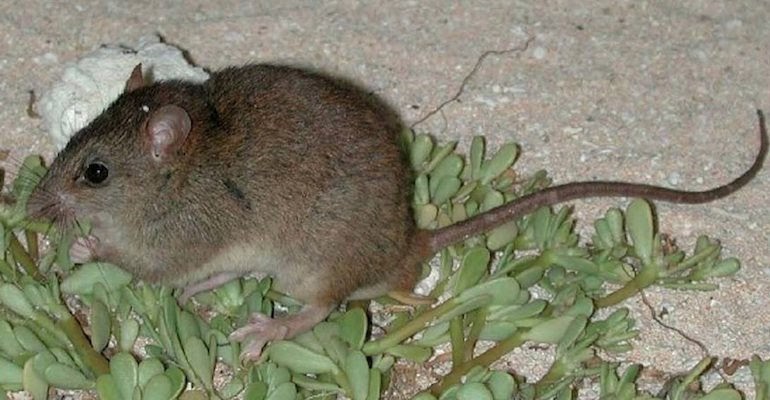
In 2019, the mosaic-tailed rat became the world’s first mammal to be declared extinct because of climate change.
This small rodent lived on a low-lying island off the coast of Australia and was last seen in 2009. Rising sea levels and high tides have flooded much of the island, destroying its habitat.
Scientists reported that a temperature rise of 1.5°C will reduce the habitats of many species. Out of 105,000 species, 6% of insects, 8% of plants, and 4% of vertebrates will lose more than half of their habitats.
Unfortunately, global warming is forcing plant and animal species to either move or adapt very quickly to local conditions.
A Shift in Ecosystems
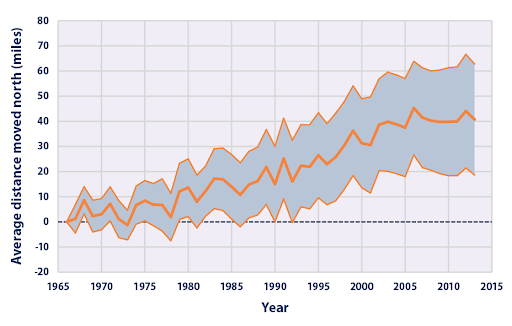
Over the past few decades, scientists have watched species move to higher elevations or higher latitudes. They are searching for cooler temperatures.
The boreal forests of Alaska, for example, are creeping up higher into the tundra regions.
As you can see in Figure 4.4.2, bird species are moving further north year after year. As animals move, they face increased competition for food. They also encounter unfamiliar species. When plants and animals cannot move, they are at risk of extinction.
With the melting of Arctic ice, animals such as the arctic fox, polar bears, and snowy owls cannot move any further north. They are watching their habitats disappear.
The Struggle to Adapt
Studies show spring has been arriving earlier and earlier. It arrives one day earlier per decade in the northern hemisphere.
An early spring means flowers may bloom earlier, but their pollinators, like bees, may not be ready.
Animals such as the yellow-bellied marmots are coming out of hibernation early. They depend on certain temperatures to wake them from their slumber. If they wake up too early from hibernation, the plants they eat have not yet emerged from the frozen ground. This can affect their survival.
Droughts and changing vegetation are also affecting food supplies for migratory animals and birds.
Some terrestrial species are not able to adapt fast enough to the changing conditions.
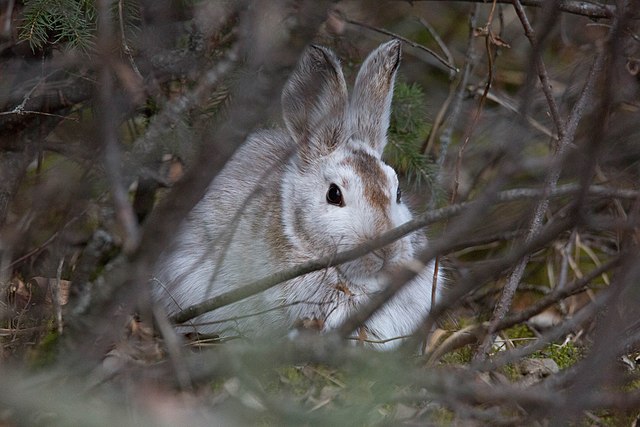
The snowshoe hare is usually brown but grows a white coat of fur during the winter. This helps the animal blend with the snow and hide from predators.
With climate change, winters have become shorter and snow has been melting faster. The snowshoe hares’ white winter coat makes them easily visible to predators.
Finally, rising temperatures are drying out plants and increasing wildfires that destroy animal habitats and ecosystems.
Invasive Species
Invasive species are animals, plants, or organisms that are outside of their natural habitat. Their presence is harmful to a region.
Many of these species were introduced by humans. Climate change and extreme weather conditions (like floods and hurricanes) are making it easy for them to spread to new areas.
The yellow star-thistle, a native of the Mediterranean region, has become a fast-growing weed species in the U.S.
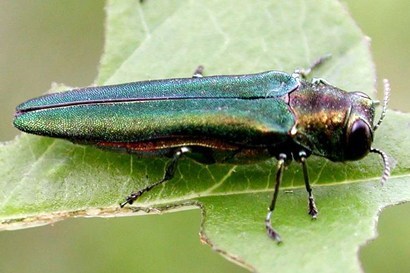
The Emerald Ash Borer beetle is native to Asia. When these beetles arrived in North America, they destroyed many ash tree species. They have the potential to impact over eight billion ash trees.
Pests
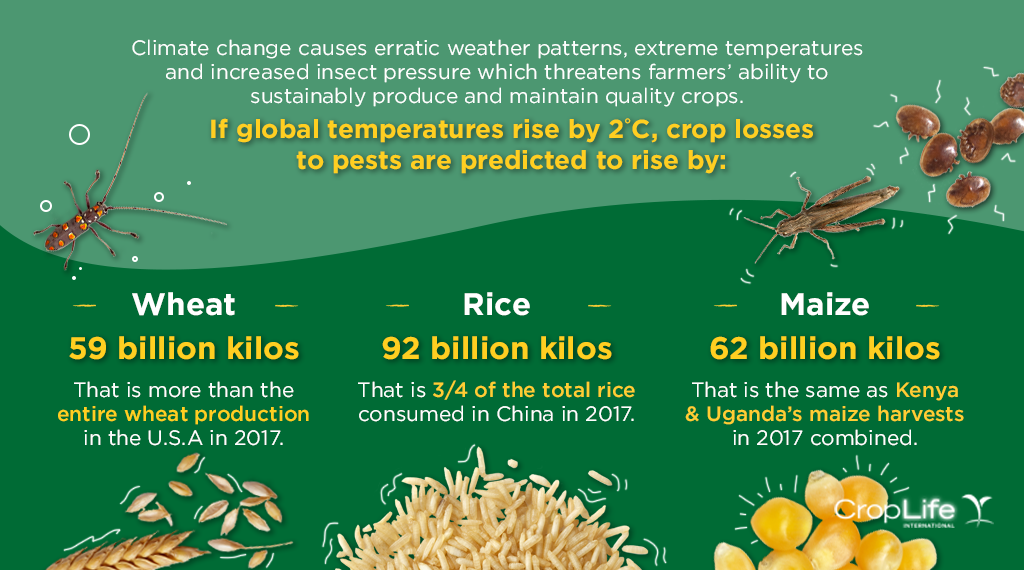
Rising temperatures have led to longer growing seasons for crops.
However, warmer winters help pests survive the winter season. This allows them to destroy more crops.
Rising temperatures and droughts are also weakening trees. It makes it hard for them to defend themselves against attacks from pests such as bark beetles.
Now that we have a good understanding of the impacts on terrestrial life, let’s learn about how climate change affects the marine ecosystem.
Summary
- Rising temperatures are forcing plant and animal species to migrate to cooler climates to survive.
- The blooming cycles of plants and the hibernation and migration patterns of animals are changing.
- Invasive species and pests are spreading further at an alarming rate, destroying local species.
In 2019, a small rodent became the world’s first mammal to be declared extinct as a result of climate change.
The mosaic-tailed rat once lived on a low-lying island off the coast of Australia and was last seen in 2009. Rising sea levels and high tides have flooded much of the island, and probably killed the last of the rodents.
This is just one example of an unfolding crisis. In a study of 105,000 species, scientists reported that if the temperature rises just 1.5°C, 6% of insects, 8% of plants, and 4% of vertebrates could lose more than half of their natural habitats.
Unfortunately, temperatures are rising at a much faster rate than species can evolve. This is forcing plant and animal species to either move or adapt very quickly to local conditions.
A Shift in Ecosystems
Across the world, plant and animal species are shifting or expanding their range to higher elevations or latitudes. This is because rising temperatures have made some habitats too hot, while opening up new areas that were once too cold.
Boreal forests in Alaska are creeping higher into the tundra regions. Over half of North America's 305 bird species have shifted their range northward by 40 miles in the last 40 years (Fig. 4.4.2).
However, movement alone does not ensure survival. When species move, they face increased competition for food or encounter other unfamiliar species.
When plants and animals cannot move -- either because the seeds don’t disperse far enough or animals have limited mobility-- they are at risk of extinction. With the melting of Arctic ice, animals such as the arctic fox, polar bears, and snowy owls cannot move any further north and are seeing their habitats disappear.
The Struggle to Adapt
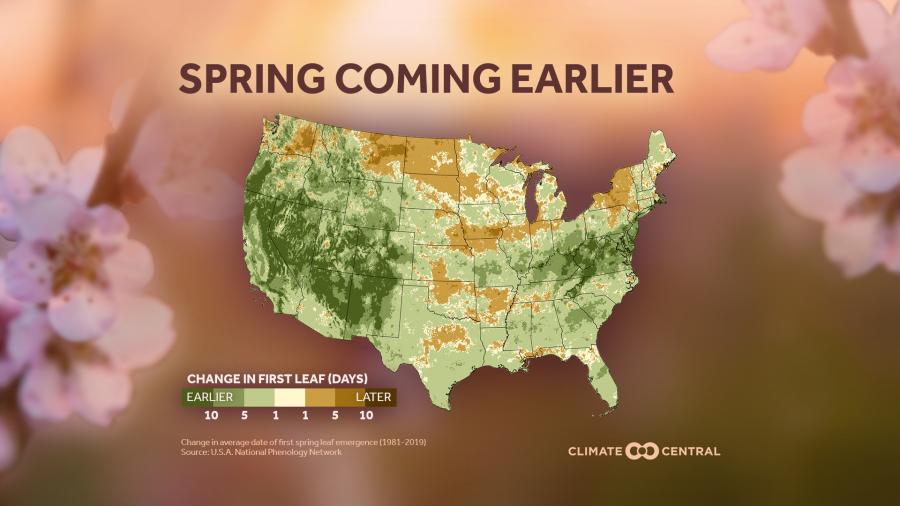
Rising temperatures are changing the natural cycles of plants and animals.
In the northern hemisphere, spring has been arriving one day earlier each decade. This can affect the survival of species as flowers bloom earlier, but their pollinators (like bees) might not be ready.
Yellow-bellied marmots are emerging from hibernation sooner, only to find that the plants they depend on are still trapped beneath frozen ground. Migratory birds and animals are impacted too, as droughts and temperatures affect their food sources.
Some terrestrial species are unable to adapt fast enough to the changing conditions. Take the snowshoe hare, which changes its coat from brown in summer to white in winter to blend with snow.
But as winters shorten, snow melts too soon, leaving white-coated hares exposed to predators. This has contributed to a decline in their numbers.
Finally, rising temperatures are drying out plants and fueling wildfires that destroy habitats and ecosystems.
Invasive Species
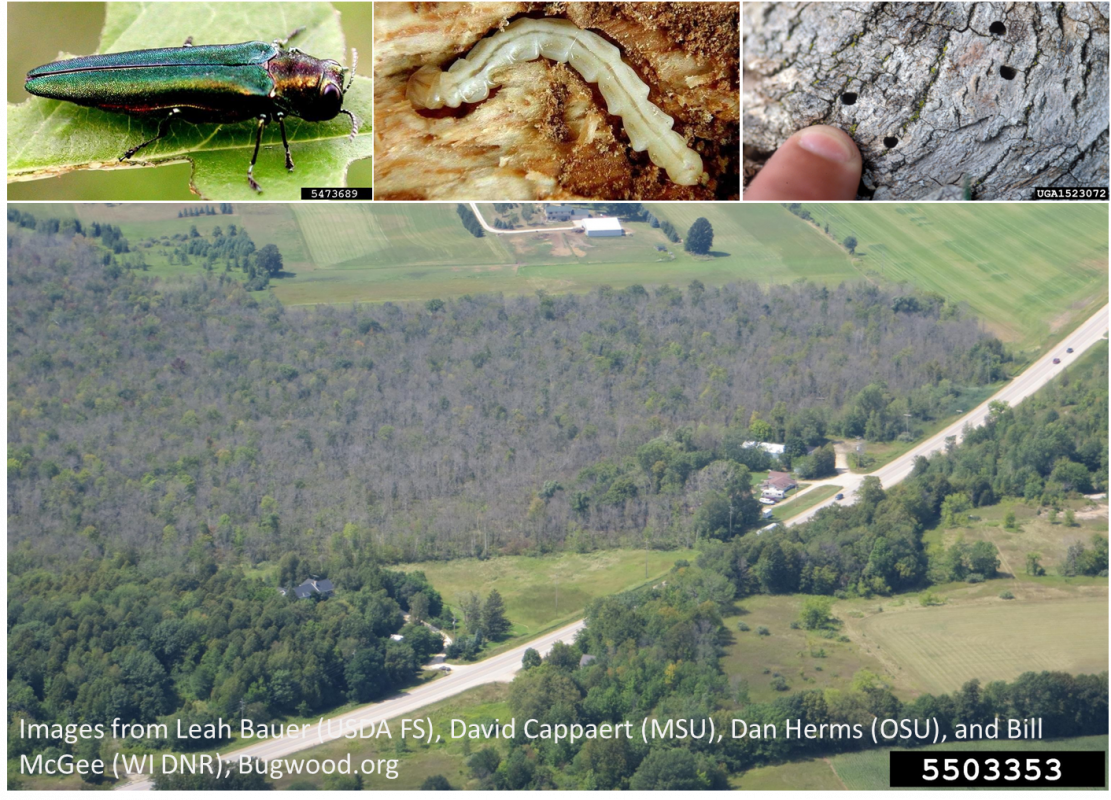
Invasive species are plants, animals, and organisms that spread into regions where they don’t naturally belong. Their presence harms native ecosystems.
While humans have introduced many invasive species, climate change and extreme weather events (such as floods and hurricanes) are helping them spread faster.
- The yellow star-thistle, originally from the Mediterranean, has become a fast-growing weed across the U.S.
- The Emerald Ash Borer beetle, native to Asia, has devastated ash trees in North America, and could affect more than 8 billion trees.
Pests
Rising temperatures have led to longer growing seasons for crops. However, they also make life easier for pests. Milder winters allow more pests to survive the cold and attack plants the following year.
One example is the bark beetle, which is killing vast numbers of coniferous trees in North America. Normally, these trees fight back with toxic sap. But frequent and prolonged droughts are weakening their defenses.
Meanwhile, rising temperatures are speeding up the survival and development cycles of the beetles, leading to higher tree mortality and threatening entire forests.
Now that we’ve explored how climate change affects life on land, let’s turn to the oceans and the impact on marine ecosystems.