
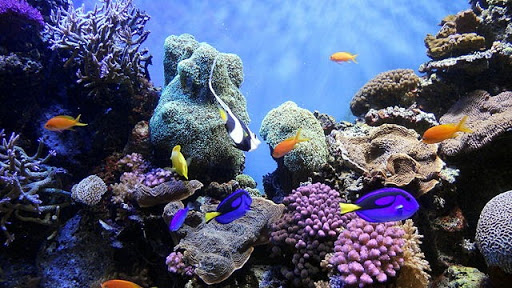
Picture the marine ecosystem. A beautiful, vast expanse of corals, of nearly all the colors of the rainbow. Fish, sharks, and turtles swim nearby, and shelled organisms rest on the ocean floor.
Our oceans are home to almost 15% of Earth’s species.
Let's take a look at how climate change is affecting the oceans.
Marine Species Migration
Many marine species cannot adapt to the rising temperatures. Species that cannot adapt are moving northward and deeper into the ocean. They are looking for cooler water.
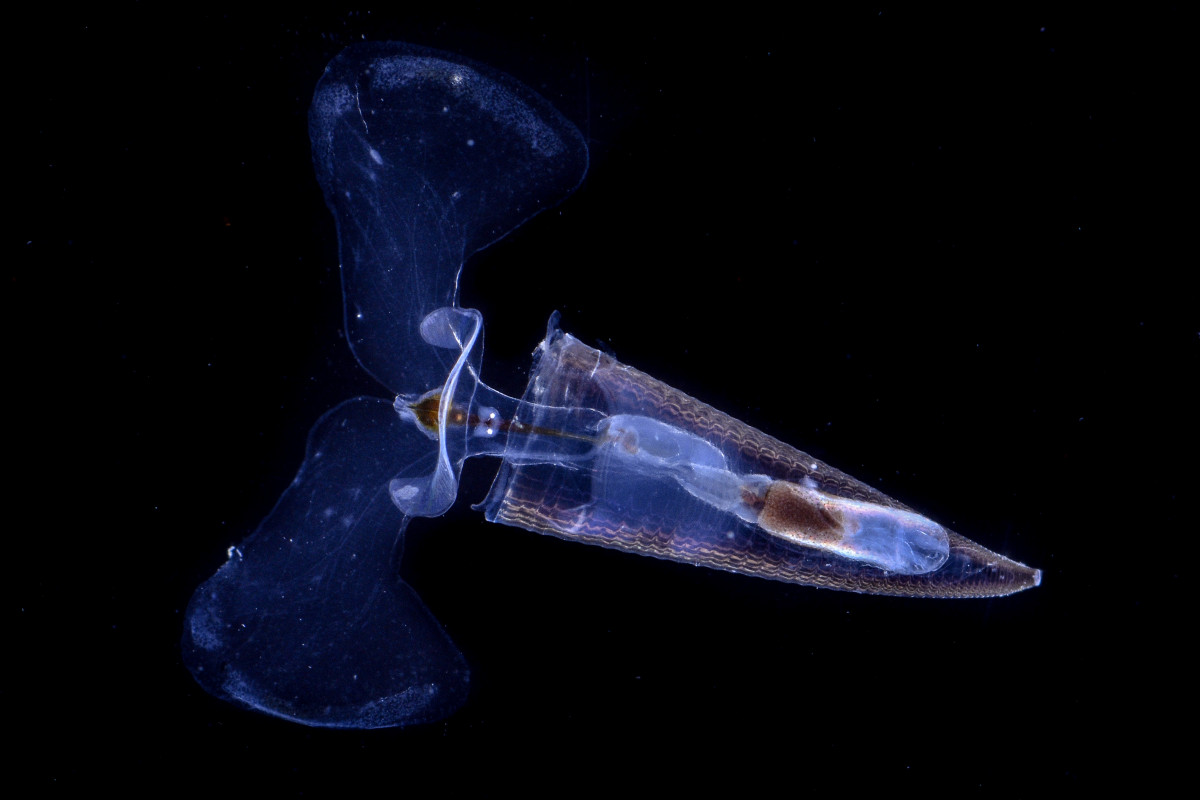
The striated sea butterfly is usually only found south of Mexico. Recently, it was spotted in California.
Local fishing industries are impacted when species move from one place to another. For example, New York’s lobster population has reduced by 98% since 1996. This is because lobsters have migrated northwards to Maine.
This has impacted the lobster industry in New York and forced fishermen to find other jobs.
Climate change is also affecting invasive species, such as the lionfish. The fish, typically found in the Pacific Ocean, is expanding its range in the Atlantic Ocean and threatening local species.
Coral Bleaching
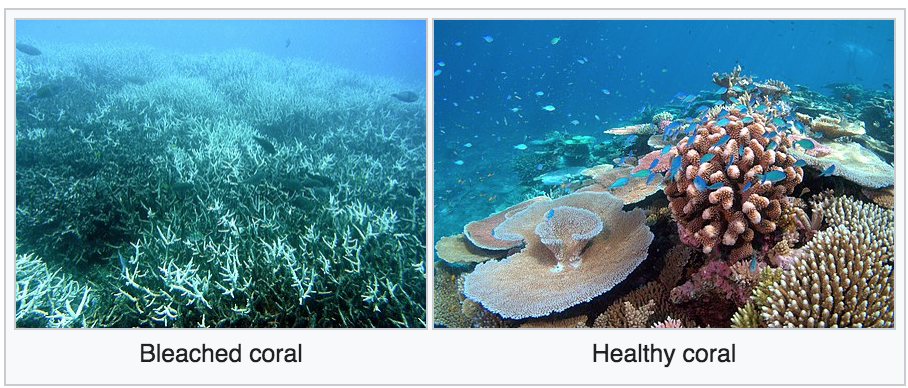
Another impact of changing ocean temperatures is a phenomenon known as coral bleaching. The vibrant colors of corals come from algae called zooxanthellae. The algae, through photosynthesis, provide food for the corals, helping them grow and reproduce.
When corals face stressful conditions, including changes in ocean temperature and increasingly polluted seawater, they expel the zooxanthellae.
Not only does this process leave corals completely colorless, but it also prevents them from being able to feed themselves.
More often than not, corals will ultimately die from coral bleaching. In 2016, almost 29% of the corals in the Great Barrier Reef died as a result of coral bleaching.
Coral reefs serve an important purpose, providing sources of food, shelter, and breeding grounds for almost 4,000 fish species. As coral bleaching continues to occur, ocean ecosystems will be significantly disrupted.
Ocean Acidification
When carbon dioxide dissolves in water, chemical reactions take place that make the ocean water more acidic. We call this process ocean acidification.
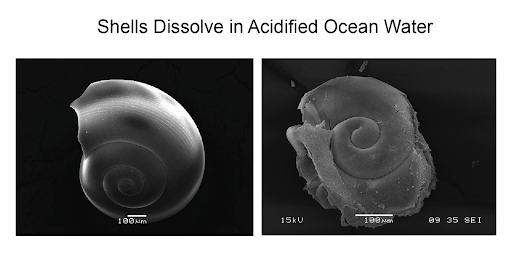
Ocean acidification is especially threatening to corals and shelled creatures like oysters, mussels, clams, starfish, and urchins. These marine species need a chemical compound called calcium carbonate to make their shells.
When too much carbon dioxide dissolves in our oceans, these animals cannot build their shells. This harms their growth and reproduction.
Ocean acidification impacts other marine life as well. Some fish are very sensitive to changes in acidity.
Others, such as the clownfish, cannot hear as well in acidic water. This makes them a target for predators. Black turban snails have slower responses to predators in more acidic water, too.
On the other hand, algae and seagrass may benefit from increasing carbon dioxide because it helps with their growth.
Oxygen Dead Zones
Rising temperatures are causing oceans to warm. Warmer waters hold less oxygen, causing oxygen-dead zones to form in the oceans.
In some areas, the levels of oxygen are so low that they cannot support any marine life. Since 1950, the number of oxygen dead zones around the world has quadrupled (Fig. 4.5.6).
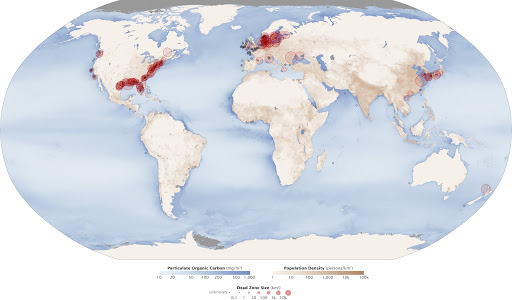
Water pollution also contributes to oxygen-dead zones in coastal regions. Fertilizers, manure, and sewage runoff contaminate the water in many places. The pollution causes a spike in the growth of algae, called an algal bloom.
When algae decompose, they use almost all the oxygen in the water. This leads to zones with little oxygen.
Next, let's take a look at how climate change affects you.
Summary
- Rising ocean heat is responsible for coral bleaching and the migration of marine species to cooler waters.
- As oceans get more acidic, it is affecting the abilities of marine organisms to form shells, digest, or reproduce.
- Since warmer water holds less oxygen, it affects marine life.
Picture the marine ecosystem. You might imagine a colorful coral reef with fish weaving between them, sharks and turtles gliding nearby, and shelled creatures resting on the ocean floor.
Did you know that the oceans are home to nearly 15% of Earth’s species?
In this section, we explore how climate change is altering marine life.
Marine Species Migration
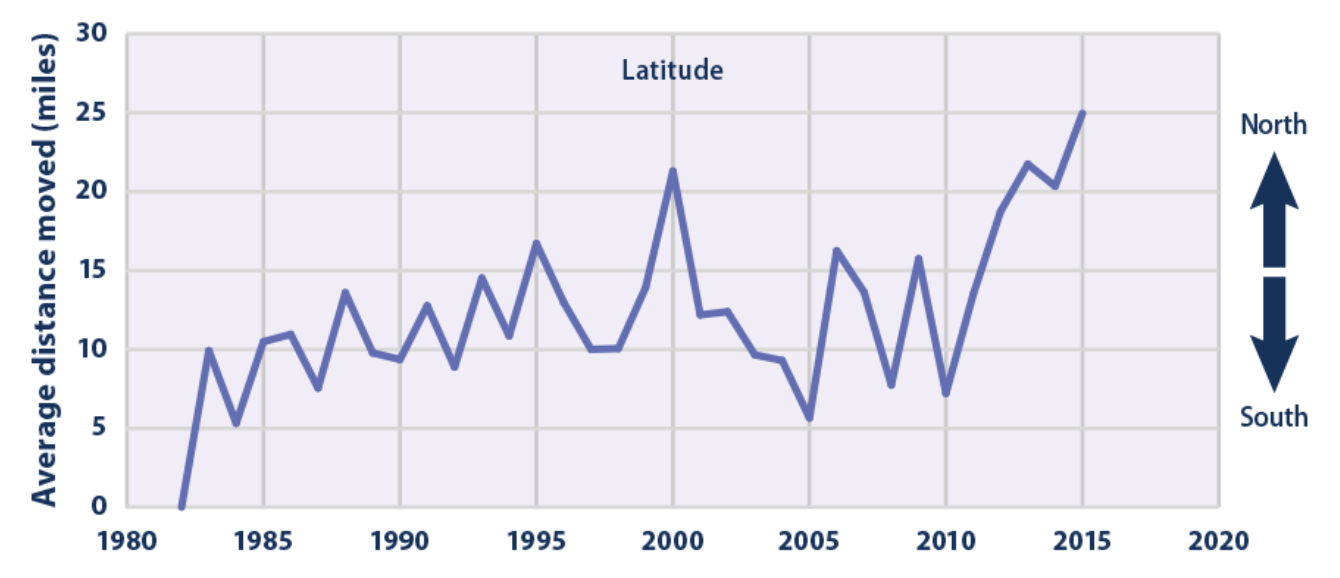
As oceans warm, many species are moving northward or deeper into cooler waters.
The American lobster, red hake, and black sea bass have shifted north by an average of 119 miles. The striated sea butterfly, once found only south of Mexico, was recently spotted in California waters.
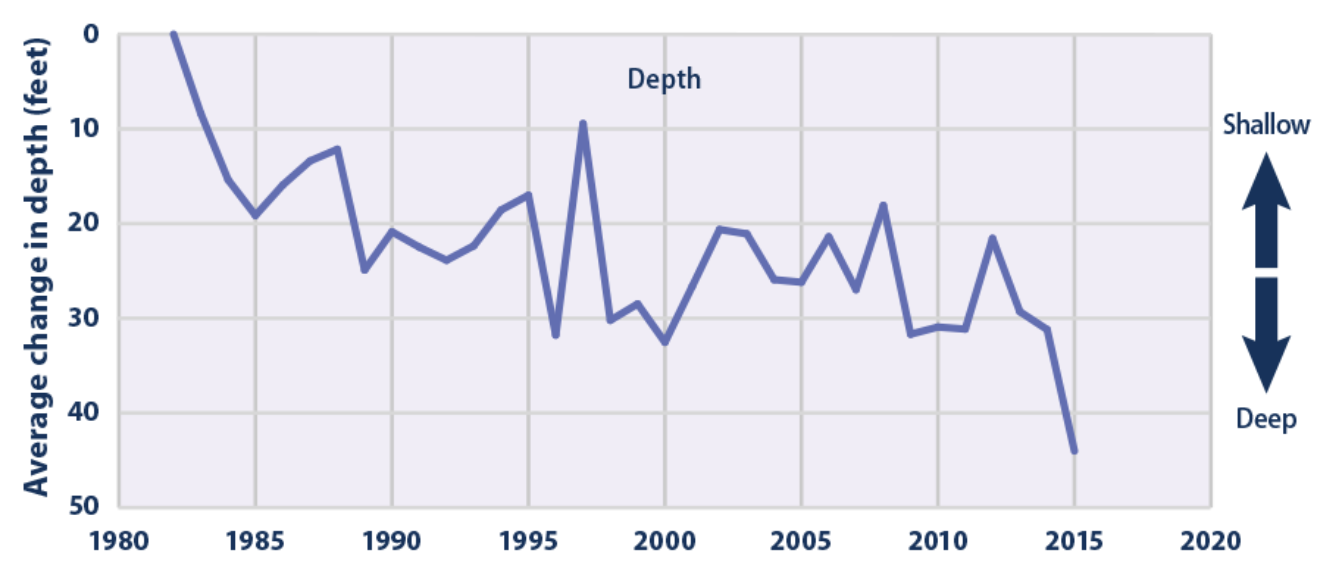
These shifts are impacting local ecosystems and industries.
For example, New York’s lobster population has reduced by 98% since 1996. The lobsters have migrated northwards to Maine, where there has been an increase in numbers. This has disrupted the lobster industry in New York and forced fishermen to find other sources of income.
Climate change is also accelerating the spread of invasive species. The lionfish, found in the Pacific Ocean, are expanding their range into the Atlantic Ocean and threatening native species.
Coral Bleaching
Another impact of changing ocean temperatures is a phenomenon known as coral bleaching.
The vibrant colors of corals come from algae called zooxanthellae. The algae, through photosynthesis, provide food for the corals, helping them grow and reproduce.
When corals face stressful conditions, such as changes in ocean temperature and increasingly polluted seawater, they respond by expelling zooxanthellae. This causes corals to lose their color (bleaching) and unable to feed themselves. In 2016, almost 29% of the corals in the Great Barrier Reef died as a result of coral bleaching.
This matters because coral reefs provide food, shelter, and breeding grounds for more than 4,000 fish species. As oceans get warmer and bleaching continues, entire ecosystems are at risk.
Ocean Acidification
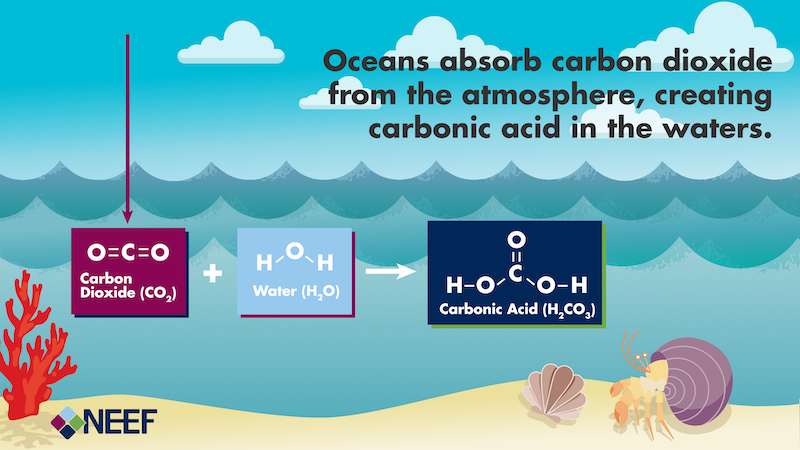
When carbon dioxide dissolves in water, a series of chemical reactions takes place, which produces hydrogen ions. These hydrogen ions make the ocean water more acidic in a process called ocean acidification (Fig. 4.5.4).
Ocean acidification threatens corals as well as shelled organisms like oysters, mussels, clams, starfish, and urchins. These marine species require a chemical compound called calcium carbonate to build their shells.
When excess carbon dioxide dissolves in oceans, a compound called calcium bicarbonate is formed instead of calcium carbonate. With less carbonate available, these organisms struggle to grow and reproduce (Fig. 4.5.5).
Ocean acidification affects other marine life as well:
- Fish: Even slight changes in acidity stress fish, reducing their energy for essential activities such as feeding, digestion, and reproduction.
- Clownfish: Studies show that in more acidic waters, clownfish lose part of their hearing ability. This makes it harder for them to detect and escape predators.
- Black turban snails: These snails have slower reaction times in acidic waters and are more vulnerable to predators.
Algae and seagrass are a few species that may benefit from increasing carbon dioxide, which helps spur their growth.
Oxygen Dead Zones
Warmer waters hold less oxygen. Hence, climate change is causing oxygen-dead zones to expand in the oceans.
In some areas, oxygen levels are so low (below 2 milligrams per liter) that they cannot support any marine life. Since 1950, the number of oxygen dead zones around the world has quadrupled (Fig. 4.5.6).
Another contributor to oxygen dead zones in coastal areas is water pollution from fertilizers, manure, and sewage. The discharges contain nitrogen and phosphorus, which in warm water promote the growth of algae. This is called an algal bloom. When algae die and decompose, they use up most of the oxygen, leaving little for organisms.
Next, we explore how climate change impacts humans.