
As we learned earlier, Earth has gone through periods of intense heat and cold for hundreds of millions of years. This was long before humans arrived!
These changes were driven by natural processes like changes in Earth's orbit, volcanoes, solar flares, and ocean currents. Can these processes explain the rate of temperature increase that we are seeing? Let's find out!
Earth's Orbit And Tilt
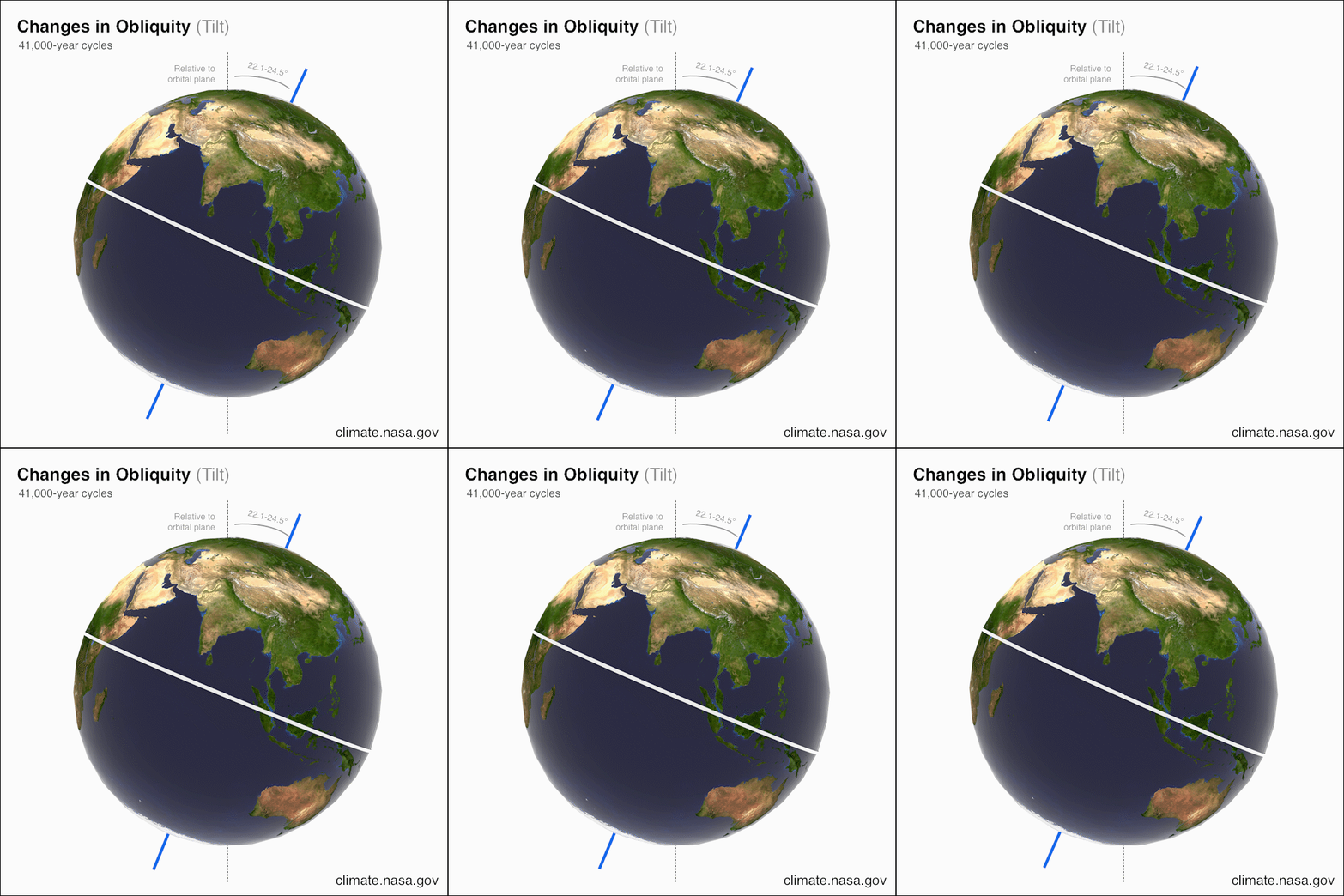
As Earth orbits the sun, it also spins on an axis that is tilted at 23.5 degrees.
Over tens of thousands of years, the Earth’s tilt can change from 22.1 degrees to 24.5 degrees. This small change can affect the climate! A larger tilt will cause hotter summers and colder winters. A smaller tilt will lead to milder summers and winters.
Earth’s orbit and wobble also change over time. In fact, changes in the Earth’s orbit, tilt, and wobble were responsible for the past glacial and interglacial cycles.
Since these cycles take place slowly over very long periods of time, they cannot explain the rate of temperature increase we are seeing in the last 150 years.
Solar Flares
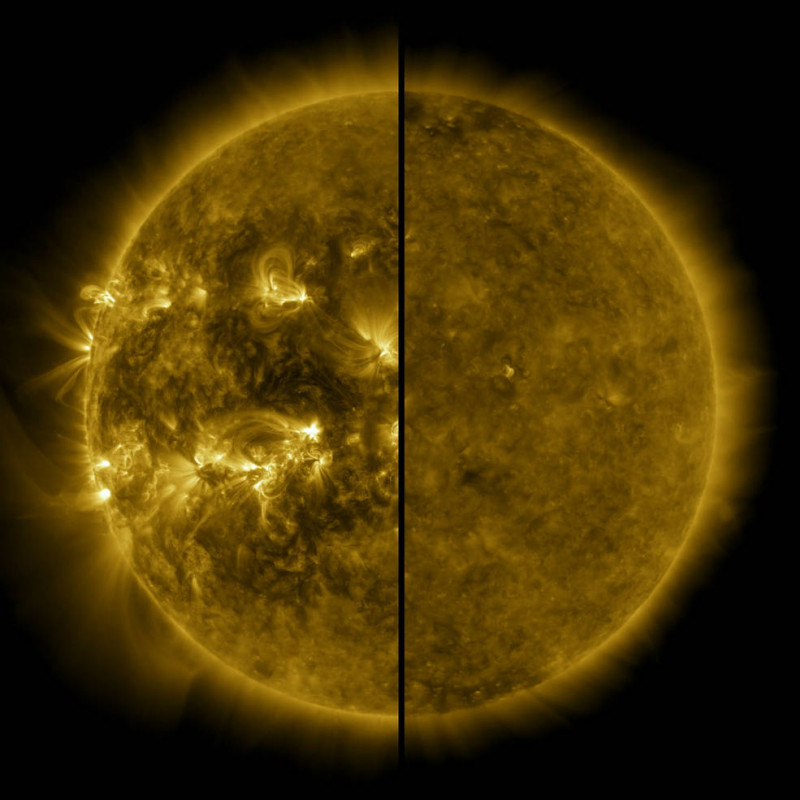
The Sun goes through a solar cycle every 11 years, during which it brightens and dims.
In the brightening phase of the solar cycle, the Sun spits out more radiation and matter. We call this a solar flare. Solar flares can cause a small increase in Earth’s temperature (less than 0.18ºF).
Our Sun had been on a dimming cycle until 2020. Yet, we are seeing an increase in temperatures on Earth. This means that other factors are warming the planet.
Volcanoes
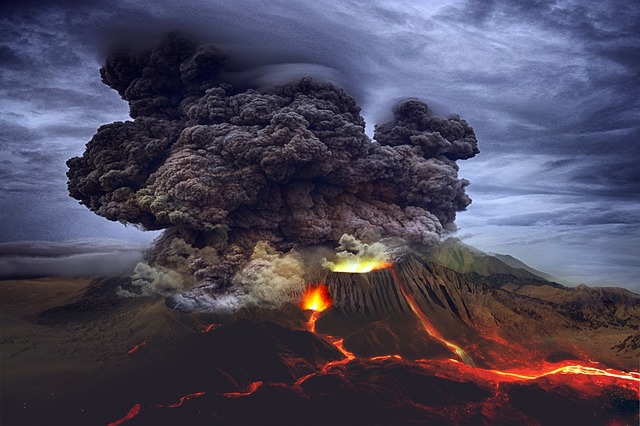
Volcanoes spew out gases and particles into the air after an eruption. This pollution can greatly impact the climate.
After an eruption, ash and sulfur dioxide cool the atmosphere by blocking sunlight. However, the cooling effects from volcanic eruptions last only two to three years.
In 1815, Mount Tambora erupted in Indonesia and was one of the most powerful eruptions recorded in history. In 1816, the average global temperature had dropped by 5.4ºF, and it was known as the “year without a summer.”
The carbon dioxide released from a volcanic eruption causes warming of the atmosphere over a longer time period.
However, the carbon dioxide emission from all volcanic activity on Earth is too small to explain the temperature rise we are seeing.
Ocean Circulation
Finally, every few years, oceans warm and cool down more than usual. This causes heating or cooling of the lower atmosphere. This affects temperatures on land and causes extreme weather like droughts and storms.
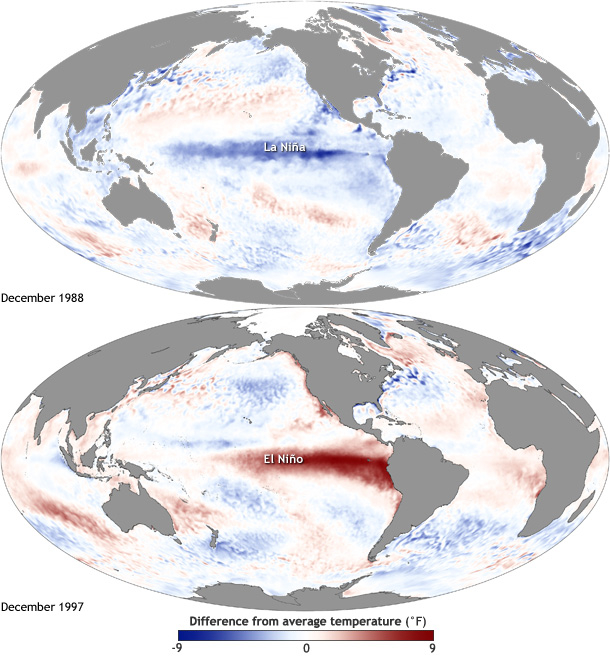
These warming and cooling patterns switch every few years; they cancel out over long periods of time. In the Pacific Ocean, we call the warming phase El Niño, and the cooling phase La Niña.
The Conclusion
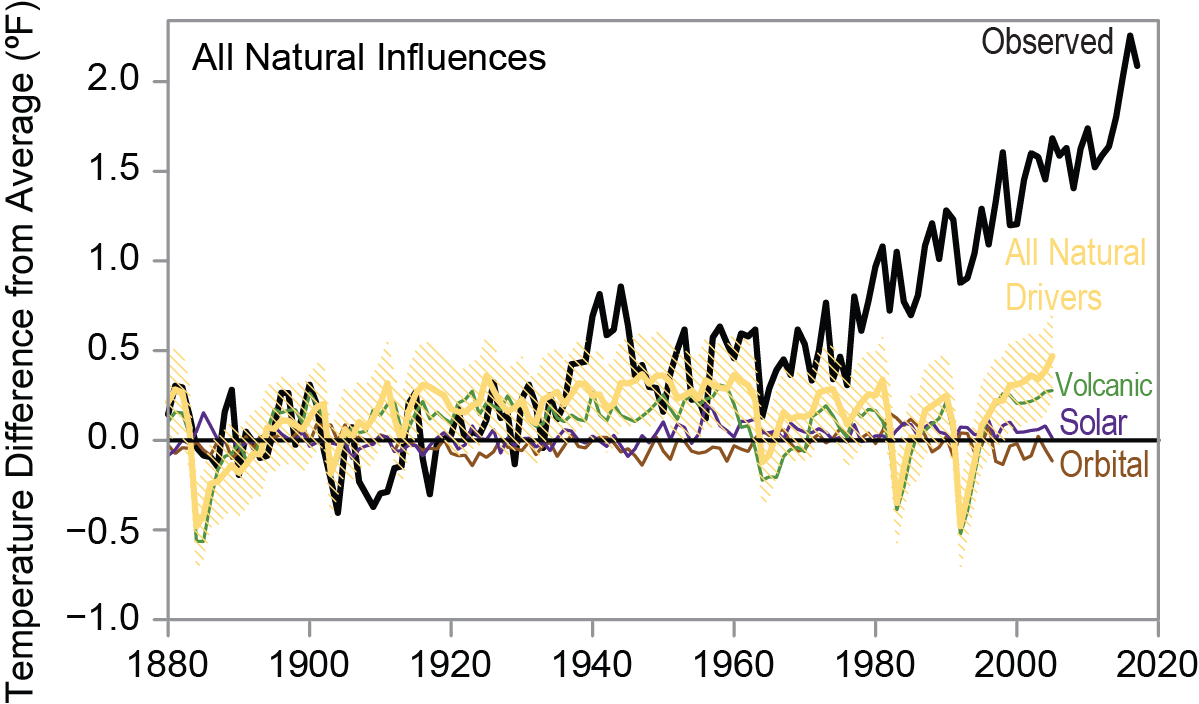
As we can see, natural factors have a very small impact on the Earth’s temperature. The extent of warming that we see today tells us that other factors might have a part to play.
Let’s find out what scientists discovered in the next section!
Summary
- Our Earth's climate has changed naturally due to changes in the Earth's orbit and tilt, solar flares, volcanoes, and ocean currents.
- Some of these changes take place over tens of thousands of years, while others take place over decades.
- If we look at the impact on Earth's temperature from natural factors in the last 150 years, the changes are extremely small.
As we learned earlier, Earth has gone through cycles of intense heat and cold for hundreds of millions of years – long before humans arrived.
These shifts were caused by natural processes, such as changes in Earth's orbit, volcanic eruptions, solar activity, and ocean circulation.
While these natural processes continue to shape our Earth's climate today, can they explain the rapid rise in global temperatures over the past 150 years?
Let's explore each of these natural phenomena to understand their impacts on the climate.
Earth's Orbit And Tilt
As Earth orbits the sun, it spins on an axis tilted at 23.5°.
Over tens of thousands of years, this tilt can change anywhere from 22.1° to 24.5° -- and even a small change affects the climate. A greater tilt leads to hotter summers and colder winters, while a smaller tilt results in milder summers and winters.
In addition to the tilt, Earth’s orbit and its wobble (known as precession) also change over long timescales. These variations, known collectively as Milankovitch cycles, have been responsible for past glacial and interglacial periods.
However, these cycles unfold very slowly – over 23,000 to 100,000 years – and cannot explain the rapid warming observed in just the last 150 years.
Solar Flares
The Sun goes through an 11-year solar cycle, during which it brightens and dims.
During the brightening phase, the Sun releases more radiation and matter. The increased radiation, known as solar flares, can cause a slight increase in Earth's temperature (less than 0.18ºF). In dimming phases, the Sun emits less radiation, leading to minor cooling.
The Sun had been in the dimming cycle and reached the solar minimum in December 2019.
During this period, Earth should have cooled slightly. Instead, global temperatures kept rising and breaking records.
Volcanoes
Volcanoes affect the climate in both the short and long term.
In the short term, ash and sulfur dioxide block sunlight, cooling the atmosphere for 2-3 years. For example, after Indonesia’s Mount Tambora erupted in 1815, global temperatures dropped by about 5.4ºF. The year 1816 was recorded as the “year without a summer.”
In the long term, volcanoes release carbon dioxide that traps heat and causes warming of the atmosphere.
However, the total emissions from all volcanic activity on Earth are far too small to explain the rapid rise in global temperatures.
Ocean Circulation
Every few years, oceans warm and cool beyond the average sea surface temperature. This causes heating or cooling of the lower atmosphere and alters climate patterns.
One such phenomenon in the Pacific Ocean is known as El Niño-Southern Oscillation (ENSO). During the El Niño phase, warmer waters in the Pacific raise global temperatures and disrupt rainfall patterns, causing storms and floods. In the La Niña phase, cooler waters bring temporary cooling and often droughts.
The average global temperatures are typically 0.4ºF higher in El Niño years than in La Niña years.
However, since these warming and cooling patterns alternate, their effects balance out over the long run.
The Conclusion
If we consider natural factors alone, the net impact on global temperatures should be small or neutral (see Fig. 3.2.5). However, the warming we observe is stronger and is happening at a much faster rate. This indicates that other factors might be at play. Let’s explore in the next section.