
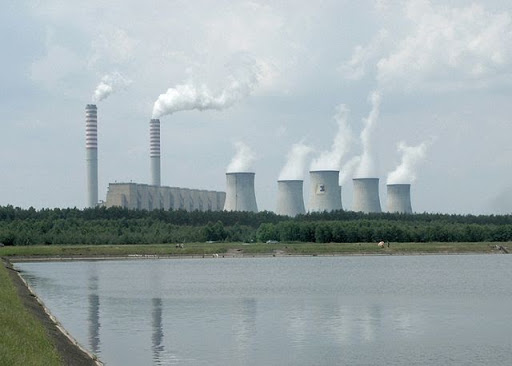
Much of our energy usage for heat and electricity comes from burning fossil fuels.
In 2016, the energy sector accounted for 33% of all emissions globally.
There are many alternatives to the burning of fossil fuels, including renewable energy and nuclear energy.
In this section, we’ll learn more about these energy options!
1. Renewable Energy
Renewable energy describes energy sources that do not run out and can be naturally restored within a human lifetime.
It is less polluting and many new jobs have become available in this industry. It can also bring energy to communities that live in remote locations
Renewable energy is getting cheaper and more affordable for people.
1.1 Hydropower
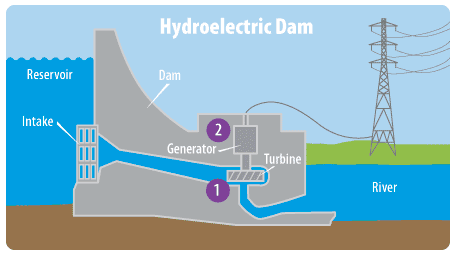
Hydropower is the largest renewable energy source for electricity around the world.
Hydroelectric plants are next to a source of water, like a river or stream. They use the power of falling water to spin a turbine and generate electricity.
Water is stored in a reservoir behind a dam and released when electricity is needed.
Hydropower does not directly produce any greenhouse gases. However, studies show that reservoirs emit methane gas.
Hydroelectric dams can also disturb the natural habitat of animals and displace people and communities.
1.2 Wind Energy
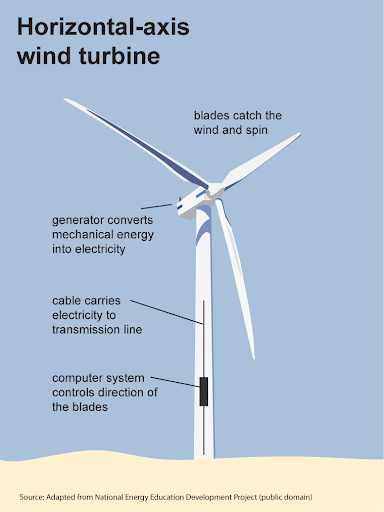
Wind energy uses the movement of the wind to turn large turbines that produce electricity.
Wind farms may be located on land as well as in the ocean. On land, they are typically built on open plains, tops of hills, and coastal areas.
The electricity from a wind farm can be fed into the power grid. Or farmers and communities can set up stand-alone wind turbines that generate energy for their local needs.
The downside of wind farms is that power generation is not reliable because the wind is not always blowing. It can also be hazardous for birds because they can accidentally fly into the blades - this is a small percentage of bird deaths.
1.3 Solar Energy
You may have seen solar panels on buildings or maybe you have one installed in your own home!
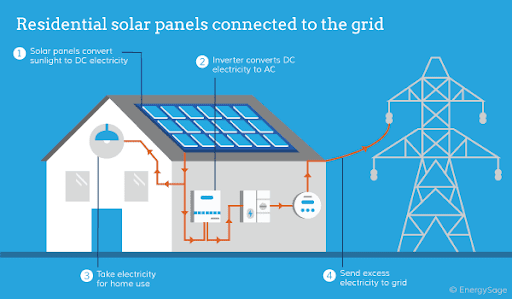
How do they work? Solar panels are lined with solar cells. These cells convert sunlight directly into electricity.
They can power everything from watches to entire buildings!
Huge solar farms generate electricity that can power nearly 180,000 homes each. Individual homeowners can also install solar panels on their roofs for their home energy needs and the excess energy can be pumped back into the grid (Fig 5.1.5).
Solar energy does not directly produce any air pollutants or carbon dioxide. Solar energy, similar to wind energy, is also less reliable. This is because location and weather conditions can affect the amount of electricity generated.
1.4 Bioenergy
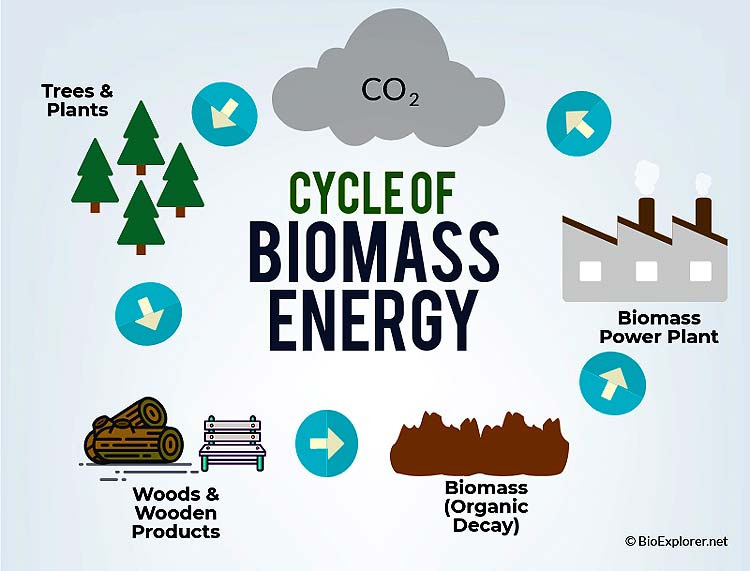
Bioenergy is made from plant waste. We call this biomass. Biomass is burned which creates steam. This steam turns a turbine to produce electricity.
Bioenergy produces greenhouse gases such as carbon dioxide. It produces less pollution overall because plants consume carbon when they grow.
The production, transportation, and processing of biomass release greenhouse gases. Also, growing crops for bioenergy requires large land areas. This competes with agricultural lands that we need to grow our food.
1.5 Geothermal Energy
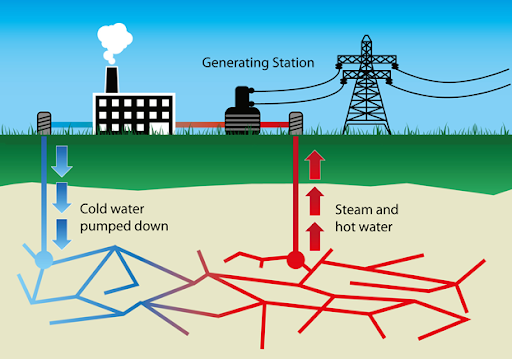
Geothermal energy plants use the energy from the Earth to produce electricity.
Beneath the Earth’s crust, there is a layer of magma that gives off heat. This heat can be used to create steam and turn a turbine to produce electricity, as well as to directly heat buildings (Fig 5.1.7).
This type of energy is always available. However, not all areas are suitable for building geothermal plants because it needs hot springs beneath the surface.
Geothermal energy is used in the United States and across the globe in 25 other countries. There is some concern that this process can trigger earthquakes.
1.6 Ocean Energy
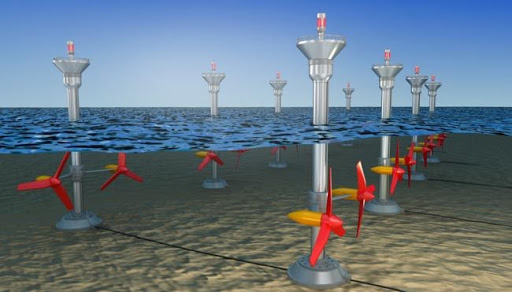
Ocean energy uses waves and tides to produce energy.
Similar to wind turbines, tidal power plants have blades that rotate underwater. They have to be much sturdier and heavier than wind turbines.
These technologies are not as advanced as other renewable energy sources. However, they can be a valuable source of power for remote areas like islands.
2. Nuclear Energy
Did you know that nuclear energy is already being implemented for electricity generation in 30 countries?
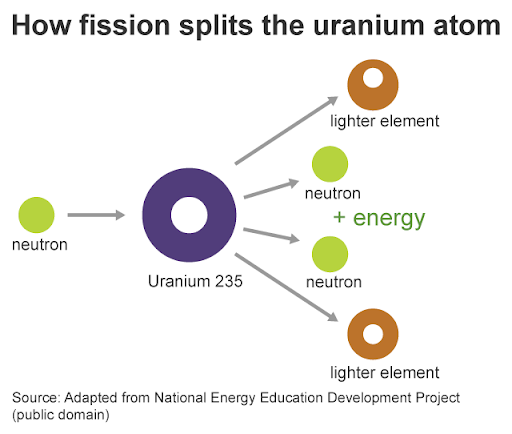
Nuclear energy is produced through nuclear fission. When Uranium atoms are split it releases energy. This energy comes out in the form of heat which is used to transform water into steam. The steam turns a turbine and generates electricity. This reaction does not directly contribute to greenhouse gas emissions.
People are concerned about nuclear plants because of the health risks. Radioactive waste from nuclear energy can remain active for up to 10,000 years and kill cells, cause DNA mutations, and even lead to cancer.
In Closing, we may need a combination of different solutions to find ways to reduce greenhouse gas emissions. This may be different in various parts of the world.
Next, let’s look at how we can reduce emissions from land use and agriculture!
Summary
- Renewable energy describes energy sources that do not deplete and can be naturally restored within a human lifetime.
- Renewable energy sources include hydro energy (from water), wind, solar, bioenergy (from organic waste), geothermal (from underground), and ocean energy (from tides and waves).
- Nuclear energy is promising but generates radioactive waste that can pose health risks.
Did you know that energy generation is the biggest source of greenhouse gas emissions?
Most of the energy we use for heating, cooling, and electricity comes from the burning of fossil fuels such as coal, oil, and natural gas. When these non-renewable energy sources are burned, they release large amounts of greenhouse gases into the atmosphere.
In 2021, the energy sector was responsible for nearly 76% of all global emissions.
The good news is that there are cleaner alternatives. In this section, we’ll explore these energy options and how they can power a more sustainable future.
1. Renewable Energy
Renewable energy refers to energy sources such as solar and wind that can be naturally replenished within a human lifetime and do not run out.
Overall, renewable energy has many advantages. It is less polluting, creates new employment opportunities, and can power communities that live in remote regions.
In addition, the cost of electricity from renewable sources is declining, making them an attractive option. The world reached a milestone in 2025 -- in the first six months alone, more electricity was generated from solar and wind, instead of coal! China led the surge, followed by the U.S, the European Union (EU), India, and Brazil.
1.1 Hydropower
Hydropower is the world’s largest source of renewable electricity.
Hydroelectric plants are located near water sources, like rivers or streams. They capture the energy of falling water to spin a turbine that generates electricity. Water is typically stored in a reservoir behind the dam and released through pipes when needed.
Hydropower does not directly produce greenhouse gases. However, reservoirs often have low oxygen levels. When bacteria break down the organic matter in reservoir beds (leaves or dead animal remains) under these conditions, methane is produced. Methane is a potent greenhouse gas.
In addition, the diversion of rivers and the building of reservoirs affect the natural habitats of wildlife and often displace local people and communities.
1.2 Wind Energy
Wind energy captures the power of moving air to generate electricity.
Wind turbines are mounted on tall towers and have propeller-like blades that spin when the wind blows. This spinning motion rotates a generator to produce electricity.
Wind farms can be built both on land and offshore in the ocean. On land, they are typically built on open plains, hilltops, or along coastlines where winds are strong. The land underneath the turbines can be used by farmers and ranchers for growing crops or grazing animals.
The electricity from wind farms is usually sent to the power grid. Sometimes, farmers and communities may install stand-alone wind turbines for their local energy needs.
The production of wind energy does not release greenhouse gases. However, it is an intermittent energy source because the wind doesn't blow all the time.
1.3 Solar Energy
You may have seen solar panels on buildings, school parking lots, or even have one installed in your home.
Solar panels are made up of many tiny solar cells made of a material called silicon. When sunlight hits silicon cells, it creates a flow of electrons that generates electricity.
Large solar farms, like those in California’s Mojave Desert, generate enough electricity to power nearly 180,000 homes each. When homeowners install solar panels, they may choose to send the excess electricity into the power grid.
Solar energy is clean because it doesn’t release greenhouse gases. However, like wind power, it is an intermittent source of energy because the amount of sunlight changes depending on the time of day, weather, and season.
Fortunately, new technologies are making solar power more reliable and efficient. Energy storage systems allow solar power to be stored and used even when it’s cloudy or nighttime.
1.4 Bioenergy
Bioenergy is derived from biomass like crop waste, microalgae, wood waste, and food waste. To generate electricity, biomass is burned to create steam, which spins a turbine.
Burning biomass releases greenhouse gases like carbon dioxide. However, because the fuel comes from plants that absorbed carbon dioxide while growing, bioenergy is considered less polluting than fossil fuels.
Still, bioenergy is not completely clean. The production, transportation, and processing of biomass also emit greenhouse gases. In addition, growing crops specifically for bioenergy requires large areas of land. This can compete with farmlands needed for growing food.
1.5 Geothermal Energy
Geothermal energy uses Earth's heat to generate electricity.
Deep below the Earth’s crust is a molten layer called magma, which gives off intense heat. This natural heat warms the cold water that is pumped in, turning it into steam. The steam rises through cracks in the Earth and can be used to spin a turbine, which generates electricity.
In some places, geothermal heat is used directly to warm homes, buildings, or even swimming pools.
Geothermal energy is reliable and always available, unlike solar or wind power. However, geothermal plants can only be built in regions that have features such as hot springs or volcanic activity. They carry another risk -- the removal of steam and water can create new fractures that can trigger earthquakes. For example, in 2017, a geothermal project in Pohang, South Korea, caused a 5.5-magnitude earthquake.
1.6 Tidal Energy
Tidal energy harnesses the natural movement of tides in oceans to produce electricity.
Just like wind turbines, tidal power plants have blades that rotate to power a generator. Since these turbines operate underwater, they need to be much stronger and heavier than wind turbines.
Some of the world’s largest tidal power plants are located in South Korea and northern France. Although tidal energy technology is still less developed than other renewable sources, it could be a valuable source of power for coastal and island communities.
2. Nuclear Energy
Did you know that nuclear energy is already used to generate electricity in more than 30 countries around the world?
Nuclear energy is produced through a process called nuclear fission, in which atoms of uranium are split apart. This reaction releases a huge amount of heat, which is used to turn water into steam. The steam then spins a turbine, producing electricity.
Nuclear energy generation does not directly release greenhouse gases. However, there are safety and environmental concerns.
Uranium mining can pose health risks to workers and nearby communities. In addition, radioactive waste produced by nuclear plants can remain dangerous for up to 10,000 years and may cause illnesses such as cancer if not properly contained.
In conclusion, to reduce greenhouse gas emissions, we will need a combination of different energy solutions. The best mix may vary from one region to another, depending on local resources and needs.
Next, let’s explore how we can reduce emissions from land use and agriculture.