
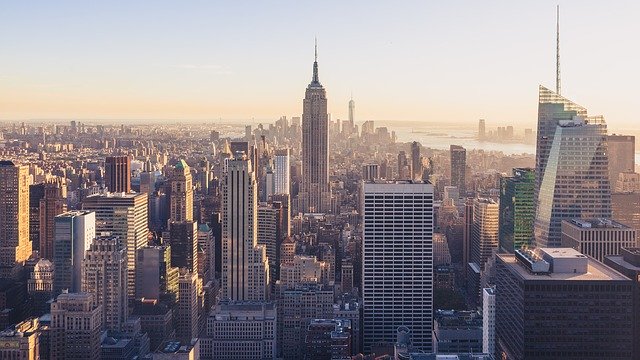
Have you ever thought about how buildings affect the environment?
With materials, construction, and everyday use, buildings are responsible for 21% of greenhouse emissions.
Our population is growing quickly, and it is important to think about how we design and use buildings.
Net Zero Design
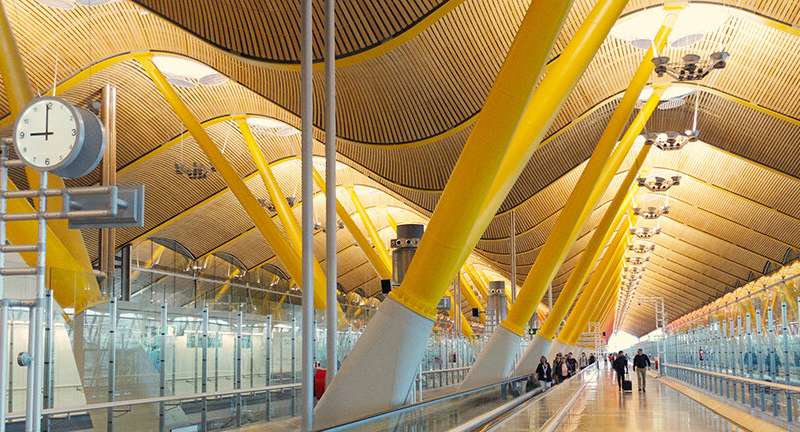
The World Green Building Council is working on a project called “Advancing Net Zero.” This project is trying to make buildings become 100% net-zero by 2050.
Net Zero energy buildings have renewable energy equipment, such as wind turbines and solar panels. In a Net Zero building, the amount of energy used for electricity and heat is roughly equal to the amount produced from renewable sources.
Buildings that consume less energy and water, and minimize waste, can reduce their impact on the environment. These buildings can receive a special certification called LEED.
Low-Energy Materials
What are some other ways that buildings can reduce emissions? One effective way is by using low-energy materials.
Research tells us that concrete-framed buildings require less energy to manufacture, process, and transport than steel-framed buildings.
Wood and bamboo use even less energy than concrete.
Buildings can be insulated using eco-friendly materials such as cork and sheep’s wool. Sheep’s wool is not only an insulator but is also a fire-retardant. Cork is made from the outer bark of oak trees and is natural, renewable, and recyclable.
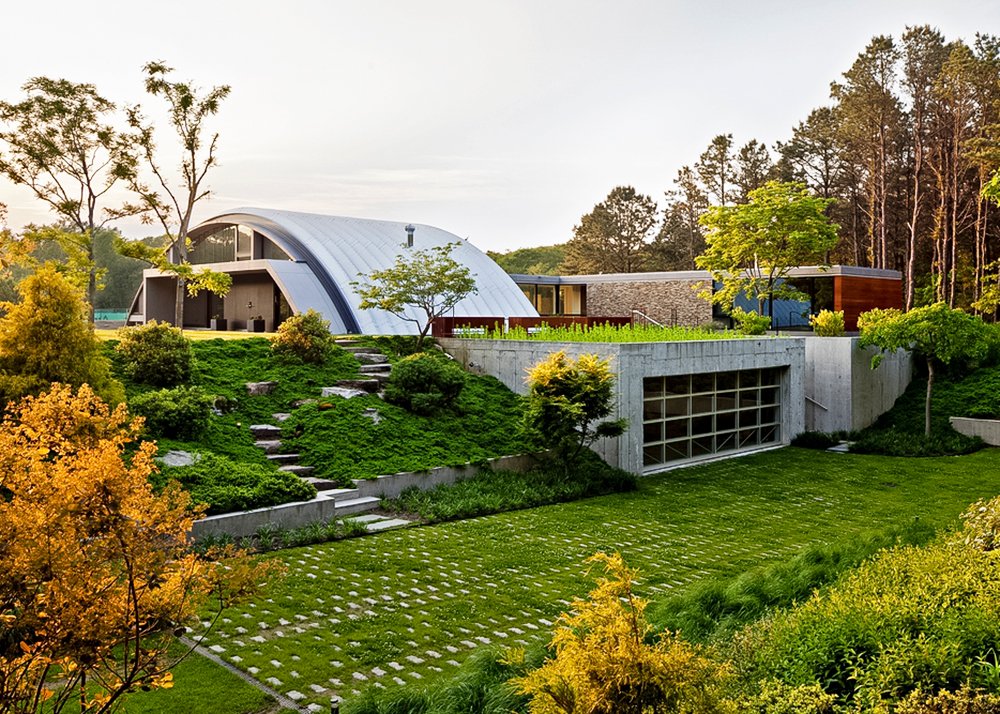
We can also think about building our structures in different places, like underground!
The soil acts as insulation in this case. Not to mention the designs are pretty cool. It looks like the Hobbits had the right idea!
Energy Efficiency
A building with well-insulated floors, walls, and ceilings can save energy. The people in this building will not need to use heaters as often during winter and air conditioning during summer.
Another way to improve energy efficiency in buildings is by updating traditional light bulbs to fluorescent or LED lighting. Fluorescent bulbs are 75% more efficient than regular bulbs.
LED bulbs are even better! They last five times longer than fluorescent and create much less heat.
We can also use natural gas for heating and use heat pumps rather than gas furnaces. We can also install special roofs that are designed to reflect sunlight.
More and more products are now being designed to be energy efficient. Do you have an Energy Star washer and dryer? Or an air conditioner with an “eco-friendly” setting that uses less energy?
Some buildings have large windows that give more natural light during the day. Others might face the sun to have natural heat during cold winters.
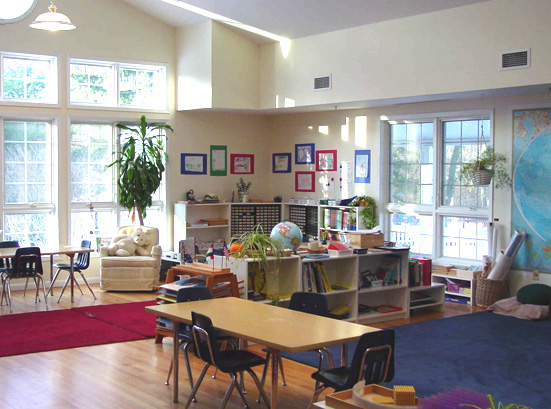
These small changes to the design of a building can make a huge change over the years! The figure below shows different features of a "green school".
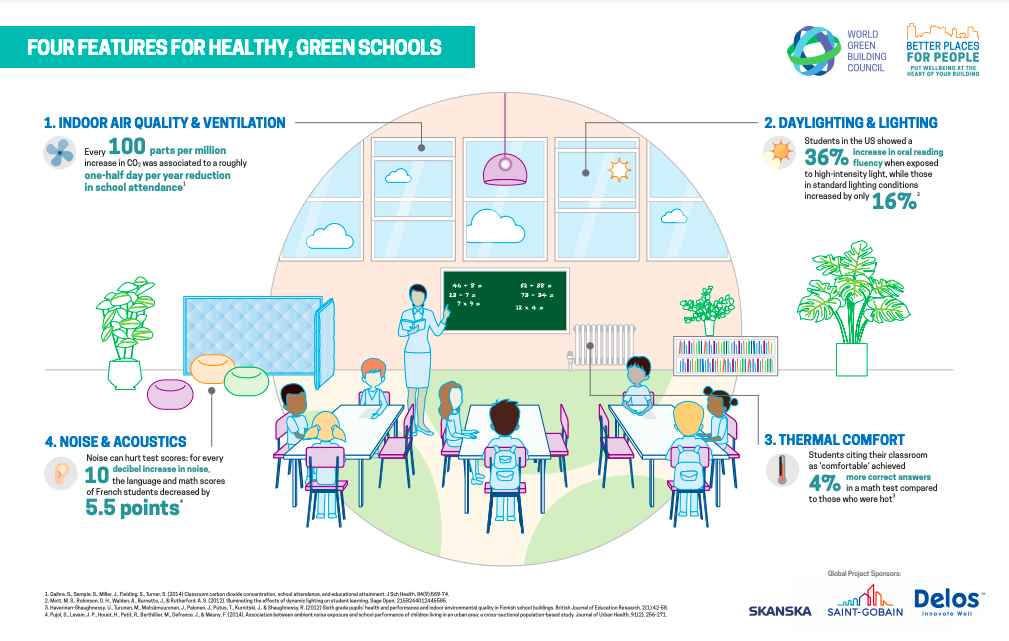
Now that we’ve understood how buildings can be more energy-efficient, let’s investigate a few creative solutions next!
Summary
- Buildings can be designed such that they produce all their energy needs through renewable energy sources
- Buildings can be made efficient by improving insulation and designing with low-energy materials.
- Using Energy Star rated appliances and efficient lighting systems such as LED can significantly reduce energy usage.
Have you ever thought about how buildings affect the environment?
From the materials used in construction to the energy required for heating, cooling, and lighting, buildings are responsible for a significant share of global emissions.
In 2019, energy use in buildings accounted for 21% of global emissions. This makes it essential to rethink how we design, build, and operate buildings as we address climate change.
Net Zero Design
In 2018, the World Green Building Council launched the Advancing Net Zero initiative. Its goal is to ensure that all buildings worldwide reach 100% net-zero emissions by 2050. Since then, the initiative has tracked about 7.2 million tons of reduced emissions across roughly 20,000 sustainable buildings.
Net-zero buildings are equipped with renewable energy systems, such as solar panels or small wind turbines. A building is considered “net-zero” when the energy it consumes for heating, cooling, lighting, and appliances is equal to the renewable energy it produces on-site.
There is also a global certification system called LEED (Leadership in Energy and Environmental Design). LEED evaluates how efficiently a building uses energy and water, manages waste, sources materials, and reduces environmental impact. LEED-certified buildings are recognized as leaders in sustainable design.
Eco-Friendly Materials
Buildings can also reduce emissions by using materials with lower environmental footprints.
Research shows that buildings made with concrete often use less energy during manufacturing and transport than steel-framed buildings. Bamboo and wood-based materials perform even better, requiring even less energy to produce.
Insulation plays an important role as well. Natural materials such as cork and sheep’s wool are excellent insulators. Wool is naturally fire-retardant and renewable. Cork, which is harvested from the bark of oak trees, is recyclable and biodegradable.
Some homes are even built partially underground, using the soil as natural insulation. This helps keep the home cooler in summer and warmer in winter, reducing energy use throughout the year.
Energy Efficiency
Improving insulation in floors, walls, and ceilings can reduce air leaks and cut energy use by up to 10%, lowering heating and cooling needs.
Switching to energy-efficient lighting is another simple step. Fluorescent bulbs use about 75% less energy than incandescent bulbs. LED bulbs last up to five times longer and produce much less heat.
Other innovations include:
- Electric heat pumps to replace gas furnaces and water heaters
- Reflective roofs that reduce heat absorption
- Using natural gas more efficiently for heating and hot water
- Installing energy-saving appliances like Energy Star–rated refrigerators, washers, and air conditioners, many of which now have eco-modes
Building design also matters. Large, well-placed windows maximize natural daylight, while south-facing buildings can capture heat from the sun during winter, reducing energy needs.
All these choices, from the materials we use to the appliances we install, might seem small on their own. But together, they make a major impact on reducing emissions from buildings.
Now that we’ve explored how buildings can become more energy-efficient, let’s take a look at some creative and innovative solutions that can help address climate change.