
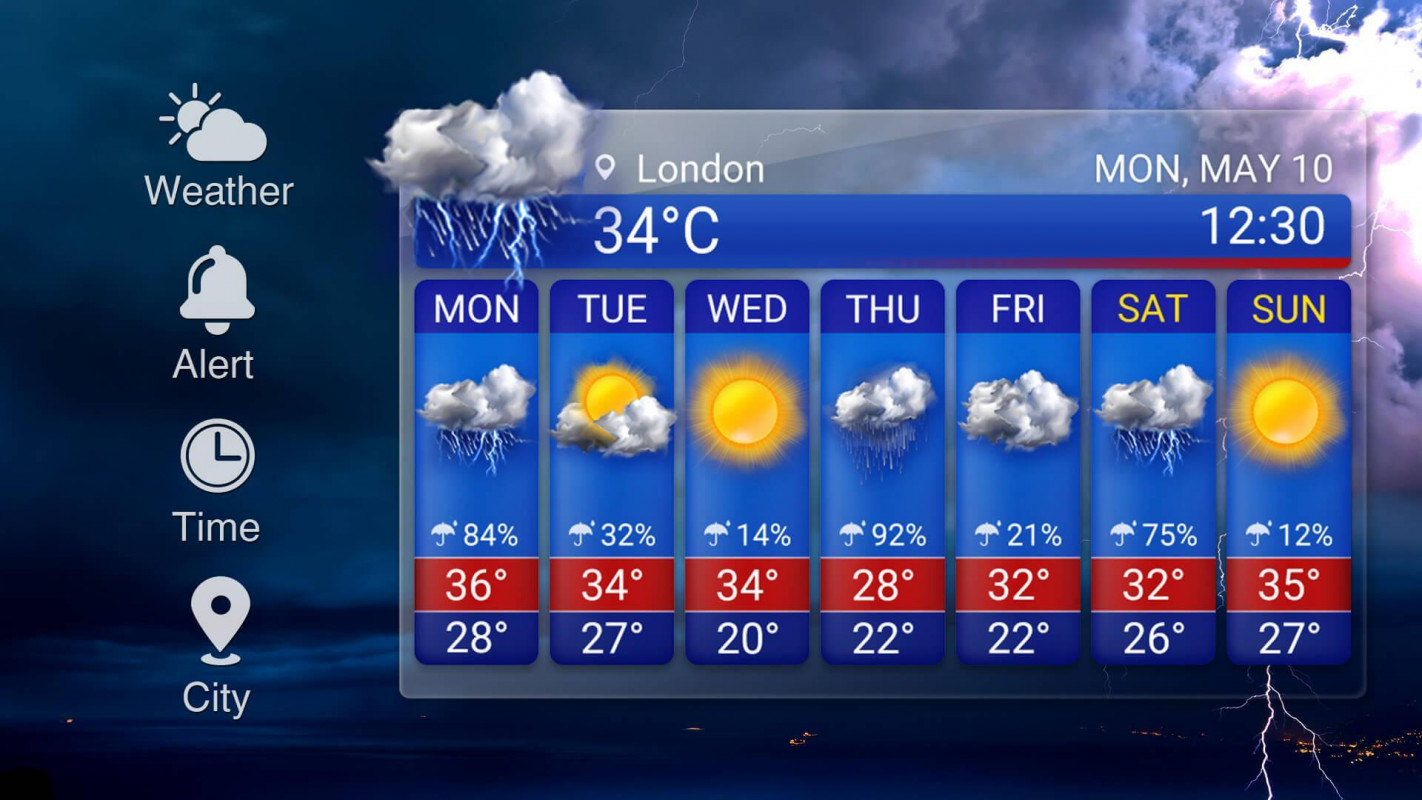
You are headed out the door to school, and your mom tells you to put on a jacket. She checked the weather forecast, and it is supposed to get pretty cold in the afternoon. You roll your eyes, but grab a jacket anyway because last week you were freezing at lunch time!
We hear a lot about weather and climate, but what’s the difference? Let’s read to find out!
Weather Changes Daily
Weather has to do with short-term conditions in the atmosphere and changes from day to day. It includes rain, snow, thunderstorms, hurricanes, and more.
Weather can also change during the day - the weather in the morning could be different from that in the afternoon or at night.
Meteorologists can predict the weather pretty accurately up to a week in advance. The forecasts become less accurate by the second week.
When the weather changes from month to month, along with changes in daylight hours, we use the term seasons.
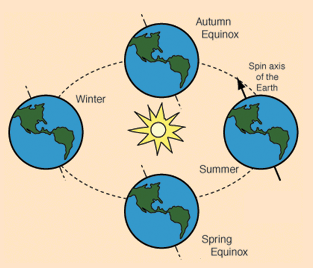
Seasons happen because our Earth's axis is tilted as it revolves around the sun. If the Northern or Southern hemisphere of our Earth is tipped towards the Sun, we have summers. When it is tipped away, we have winters. Spring and Fall happen in between the summer-winter cycle (Figure 1.1.2).
Climate Is Long Term
When people say "It is cold in Siberia" or "It is hot in the Sahara Desert of Africa," they are talking about climate.
Siberia will have some days that are warm. Even in the dry Sahara Desert, there is a little rainfall once in a while. This is the weather, but in general, the climate in Siberia is cold, and the Sahara Desert is hot.
As we have learned, the term weather refers to short-term changes in the atmosphere. Climate, however, refers to weather over a long period of time in a certain region.
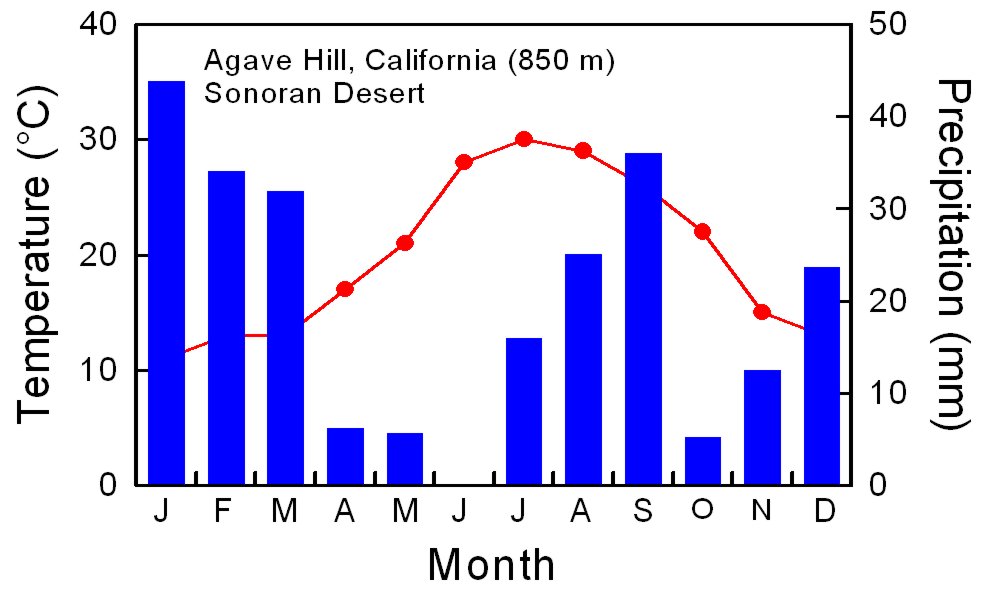
Figure 1.1.3 is a climograph that represents the climate for a city. The red line represents average monthly temperatures in a year, and the blue bars represent average monthly rainfall.
Global climate refers to the climate of our Earth as a whole and refers to the average climate across different regions and countries.
In the next section, let’s take a look at the weather in detail.
Summary
- Weather refers to short-term conditions in the atmosphere. It changes from day to day, and several times within a day.
- When the weather changes from month to month, along with changes in daylight hours, we refer to it as seasons. Seasons are caused by our Earth's tilt.
- Climate refers to weather conditions over periods of 30 years or more.
You are heading out the door to school when your mother reminds you to wear your warmest jacket. She has checked the weather forecast -- it is expected to get quite chilly in the afternoon.
We rely on weather forecasts from meteorologists to make everyday decisions, from choosing what to wear to planning outdoor activities like a weekend ski trip or a picnic.
But what exactly is weather, and how is it different from climate? Let’s find out!
Weather Varies Daily
Weather refers to short-term conditions of the atmosphere and can include rain, snow, thunderstorms, hurricanes, and more. Weather can change from day to day or even hour to hour -- what you experience in the morning might be different by the afternoon or evening.
Meteorologists can usually predict the weather fairly accurately up to a week in advance, though the forecasts become less accurate by the second week.
As the weather patterns shift from month to month, along with changes in daylight hours, we enter different seasons. Seasons occur because the Earth's axis is tilted at 23.5 degrees as it orbits the sun. When the Northern (or Southern) Hemisphere tilts towards the Sun, it's summer; when it tilts away, it's winter. Spring and Fall occur between the summer and winter seasons.
Climate Is Long Term
Now, when someone says "It's cold in Siberia" or "It's hot in the Sahara Desert," they are referring to climate. Siberia can have some warm days, and even the dry Sahara desert does get occasional rain -- this is weather. But overall, Siberia tends to have a cold climate, and the Sahara a hot climate.
Climate varies across different zones, from tropical rainforests near the equator to the polar tundras near the poles, each with distinct patterns.
Climate refers to the average weather in a particular place over longer periods, typically 30 years or more. These long-term averages are called Climate Normals and are updated every decade. Meteorologists compare daily weather to these normals to determine how daily weather differs from typical conditions for that specific time of the year.
Figure 1.1.3 is a climograph that represents the climate for a city. The red line represents average monthly temperatures in a year, while the blue bars represent average monthly rainfall.
Global climate refers to the climate of our Earth as a whole and is the average climate across different regions and countries.
In the next two sections, we will explore weather and climate in detail, why they matter, and how they are measured.