
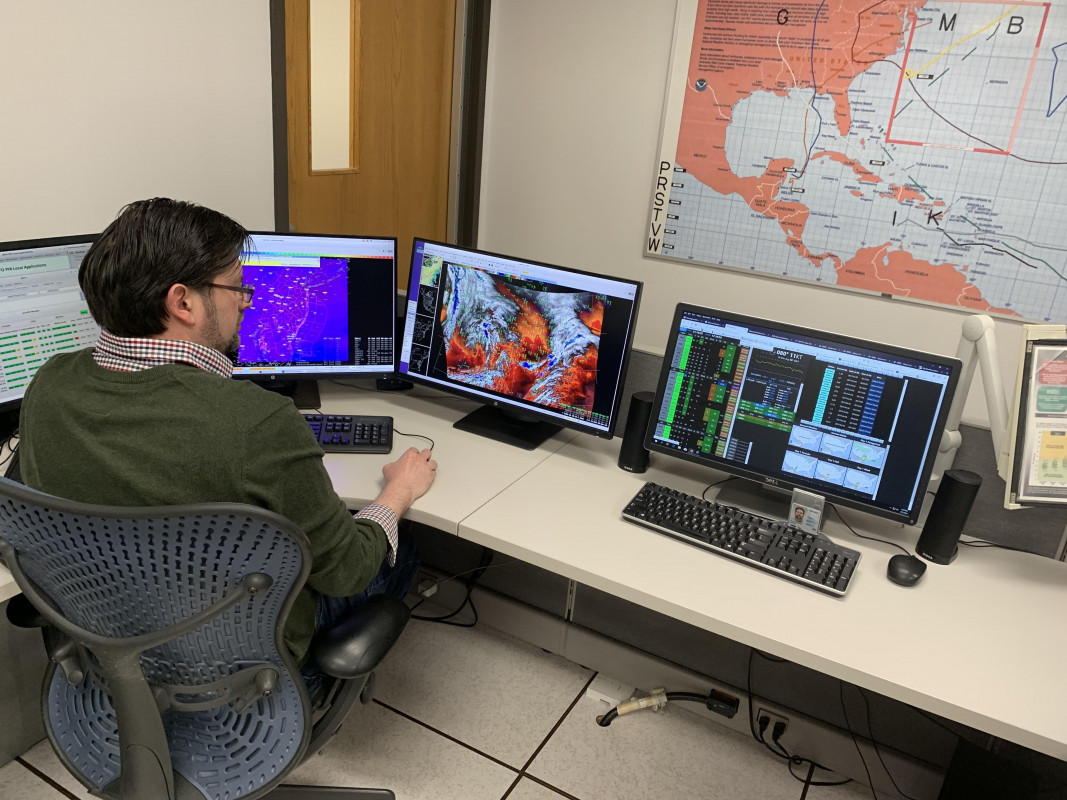
You might have heard the weatherman on TV predict the week's forecast. They also warn us about an upcoming snowstorm, hurricane, or tornado.
So, how do meteorologists come up with these 5-7 day weather forecasts?
They depend on weather models to tell the public about the weather. Weather models are computer models that use equations to show the weather patterns in the atmosphere.
How Do Models Work?
The models divide the Earth’s atmosphere into a 3D grid, known as cells (see Fig 1.4.2).
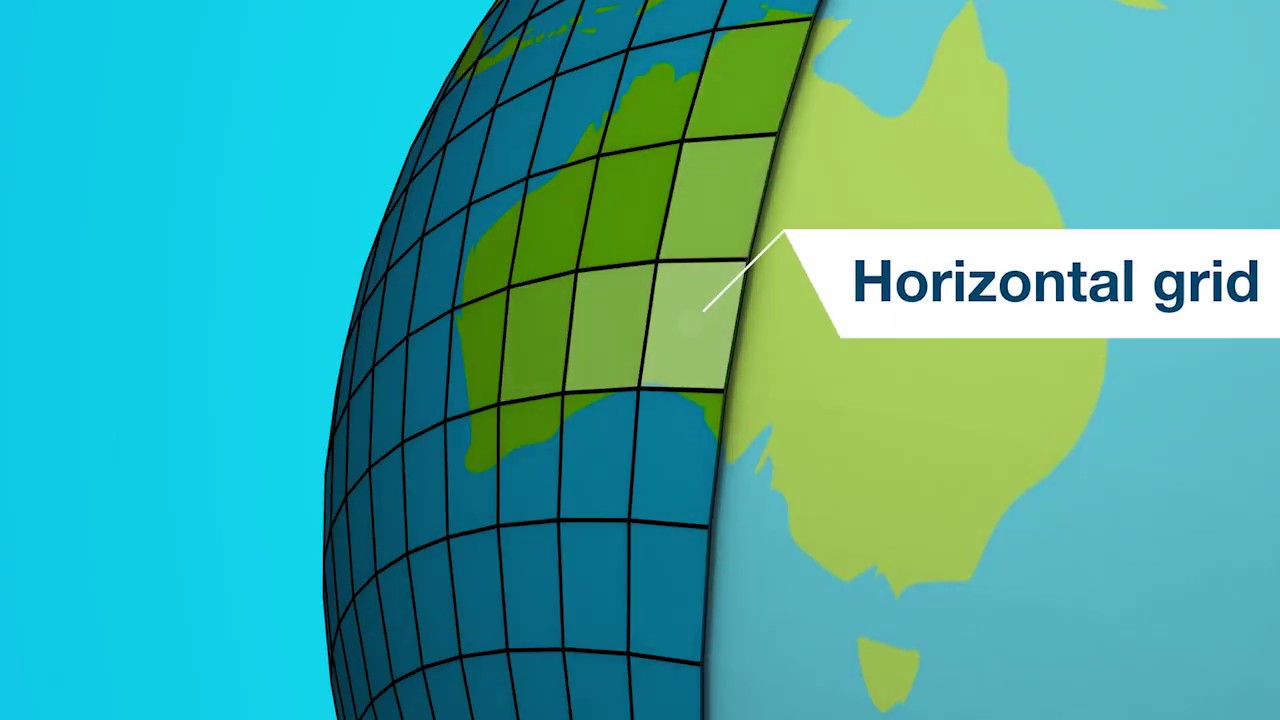
These cells are updated with the current weather conditions. They also look at different geographical features like mountain ranges and sources of water in an area.
In a simulation, the cells communicate with each other, and together, they predict future weather. Over time, cell sizes have gotten smaller which gives us more accurate weather forecasts!
How accurate are weather forecasts? According to NOAA, 5-day weather forecasts are accurate 90% of the time, 7-day forecasts are 80% accurate, and 10-day forecasts are 50% accurate. That means, forecasts are less accurate further into the future.
Creating Climate Models
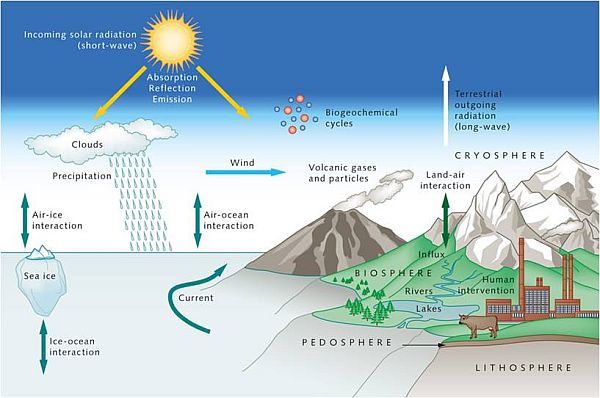
Climate models are much more complicated than weather models. They analyze and predict patterns over much longer periods of time. They model ocean currents, ice melting, evaporation, the carbon cycle, and more. In other words, the models mimic all the different processes that take place on Earth.
Testing Models
Once the climate models are created, scientists have to test them to make sure they work correctly. One way is by running them from a certain time period in the past to the present. Then they compare climate and weather conditions from the same time period to see if they match.
If they don't match, scientists improve the models and try again. If they do match, then scientists have confidence that the model can accurately project future conditions.
It is important to know that these models can only project the frequency of events. They cannot predict the exact timing, such as when a hurricane might happen in the future. They might need a crystal ball for that!
We learned how scientists create models to project into the future. However, we have been keeping weather records only since the 1850s. Without a time machine, how do scientists study the Earth's climate from before that time? Let's find out in the next section!
Summary
- Scientists create weather models and climate models to predict the future.
- Weather models use data from weather instruments. They can forecast up to two weeks in advance.
- Climate models are more complex. They model the different processes that take place on Earth.
You’ve probably seen a weather forecast on TV or heard warnings about an approaching snowstorm, hurricane, or tornado.
But how do meteorologists predict the weather for the next five to seven days?
They rely on weather models that simulate the natural processes occurring on Earth. This helps them make forecasts and inform the public.
How Do Weather Models Work?
Weather models divide the Earth’s atmosphere into a three-dimensional grid, composed of cells (see Fig. 1 .4.2).
- Each cell is updated with current weather information, such as temperature, air pressure, humidity, cloud cover, wind speed, and wind direction. These are collected from an array of weather instruments as described here.
- The models also account for geographic features like mountains, forests, or bodies of water in each area represented by the cell.
- During simulations, each cell exchanges information with neighboring cells. Then, using mathematical equations that describe the behavior of the atmosphere, the model forecasts the weather over the next few days.
In the 1990s, each grid cell covered distances of 300 miles per side. Thanks to advances in computers, today's models can work with cells as small as 18 miles across! This allows for much more detailed and accurate forecasts.
How accurate are weather forecasts?
According to NOAA, 5-day forecasts are about 90% accurate, 7-day forecasts are 80% accurate, while 10-day forecasts drop to around 50% accuracy. The maximum window for a weather forecast is roughly two weeks. Beyond that, predictions become unreliable due to the constantly changing nature of atmospheric conditions.
Creating Climate Models
Climate models (also known as GCM or General Circulation Models) are far more complex than weather models. While weather models predict short-term conditions, climate models simulate long-term trends over decades or even centuries.
Climate models include not only the atmosphere but also processes that represent land, oceans, and cryosphere (frozen parts of the Earth). They simulate large-scale systems such as ocean currents, glacier melt, evaporation and precipitation, the carbon cycle, and more (Fig. 1.4.3).
In other words, the models simulate the physical, chemical, and biological processes that drive the Earth’s climate.
Testing Models
Once climate models are built, scientists test them to ensure they behave as expected.
One method is called hindcasting, where a model is run using data from the past (for example, starting in 1950) to simulate conditions up to the present day. The model's output is then compared to real, observed weather and climate records from that time.
If the model doesn’t match reality, scientists revise and re-run the simulations.
If the model produces results that closely match observed data, it builds confidence in the model’s ability to project future conditions.
However, it’s important to remember: climate models project patterns and trends, such as how often hurricanes might occur or how global temperatures may rise. They cannot predict the exact timing of individual events.
So far, we’ve understood the basics of weather and climate, and how scientists model the Earth to project the future. But here’s a big question -- we have only been keeping weather records since the 1850s. How do scientists study the Earth's climate from before that time? Let's explore next.