
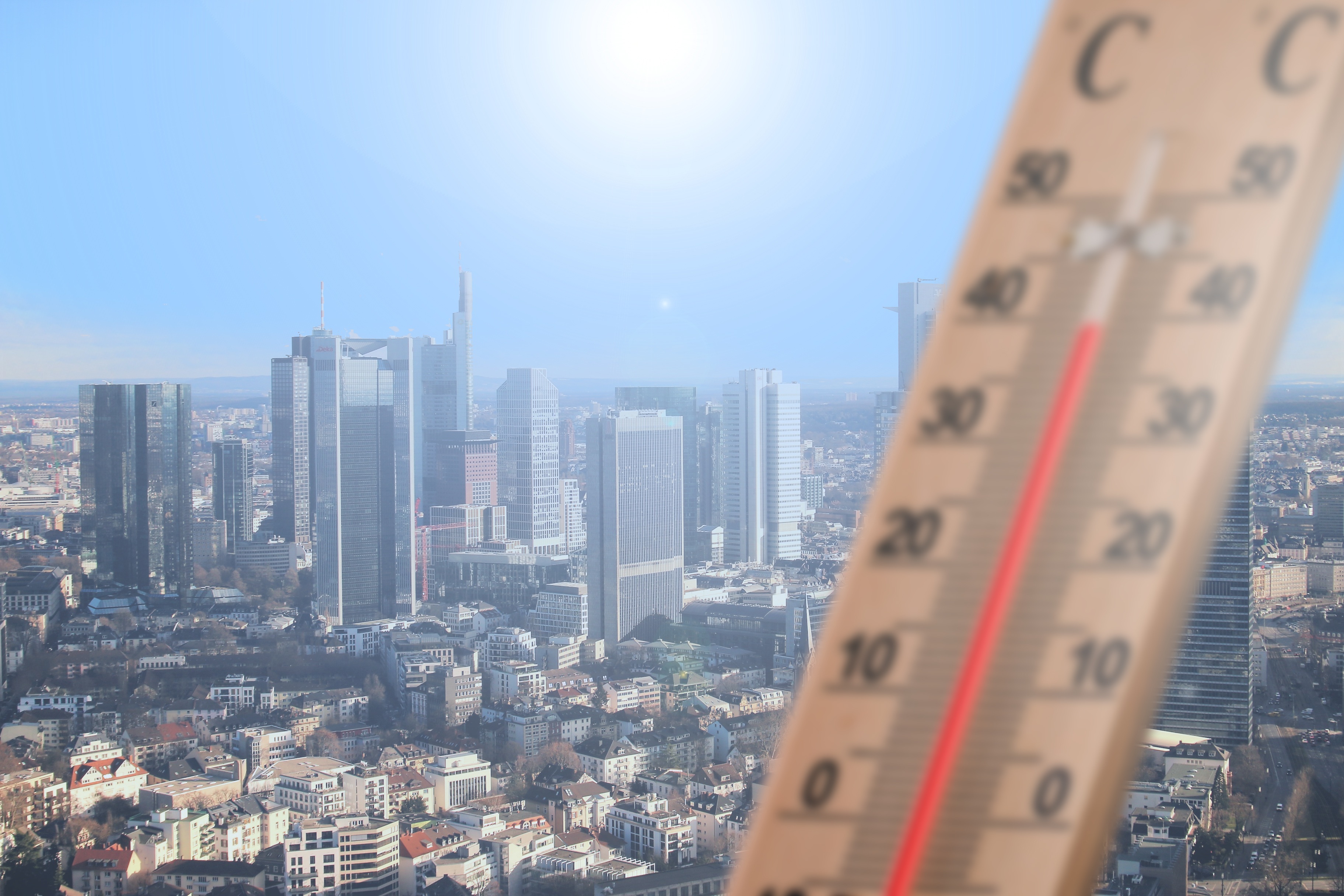
Have you ever wanted to sit somewhere shady to cool off from the heat, but there’s no shade to be seen?
As global temperatures rise, the absence of adequate shade during extreme heat is a dangerous reality for many.
To address this growing issue, the United Nations Environment Programme partnered with the city of Paris to co-launch the 50@50 project. These 50 cities are actively deploying low-tech cooling solutions that will protect citizens while avoiding a rise in carbon emissions.
Challenges Cities Face
Did you know that cities tend to be 5-10℃ (9-18°F) hotter than surrounding rural areas? This is due to a phenomenon known as the Urban Heat Island (UHI) effect.
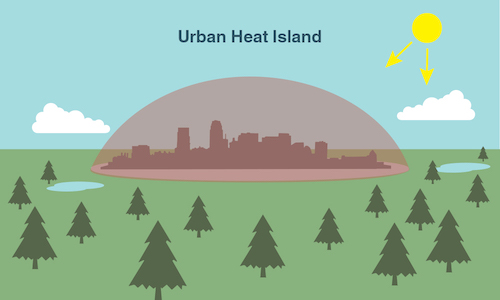
Cities, with their pavements and buildings, have a lot of concrete and asphalt, materials that capture heat during the day and slowly radiate it back at night. As a result, cities take longer to cool down than surrounding areas.
This disparity is particularly evident between cities in the Global North (U.S., Canada, and Japan) and those in the Global South (Africa, parts of Asia, and Latin America). Global South cities offer 30% less natural cooling from parks and trees than wealthier Global North cities, steadily widening the urban heat gap.
While nearly 90% of U.S. and Japanese homes have air conditioning, access to the technology drops below 8% in the world's hottest regions and under 4% in Sub-Saharan Africa. This extreme divide leaves the most exposed populations without indoor relief. Finally, in rapidly industrializing cities in the Global South, the use of older technology in AC units could be a source of additional greenhouse gas emissions.
Combating Heat
In 2025, UNEP, with other climate-centered organizations, launched a joint project named “Beat the Heat” at COP30 in Belém, Brazil. Their mission is to increase local/national cooperation to develop sustainable site-specific cooling solutions.
“50@50” is a collaboration between Paris and UNEP that promotes low-tech ways to combat rising heat. These include increasing green spaces and shaded areas so the trees can release cooling moisture, and installing water fountains or misting stations to cool the surrounding area by evaporation. Other solutions include light-colored roofs that reflect the heat better, and building cooling centers that provide access to those who need it.
While cities are taking big steps, the average citizen can contribute in small but significant ways, such as adjusting the thermostat by a few degrees in their homes. You can be part of the 50@50 solution as well!
Sources: UNEP, NASA, Coolcoalition.org