
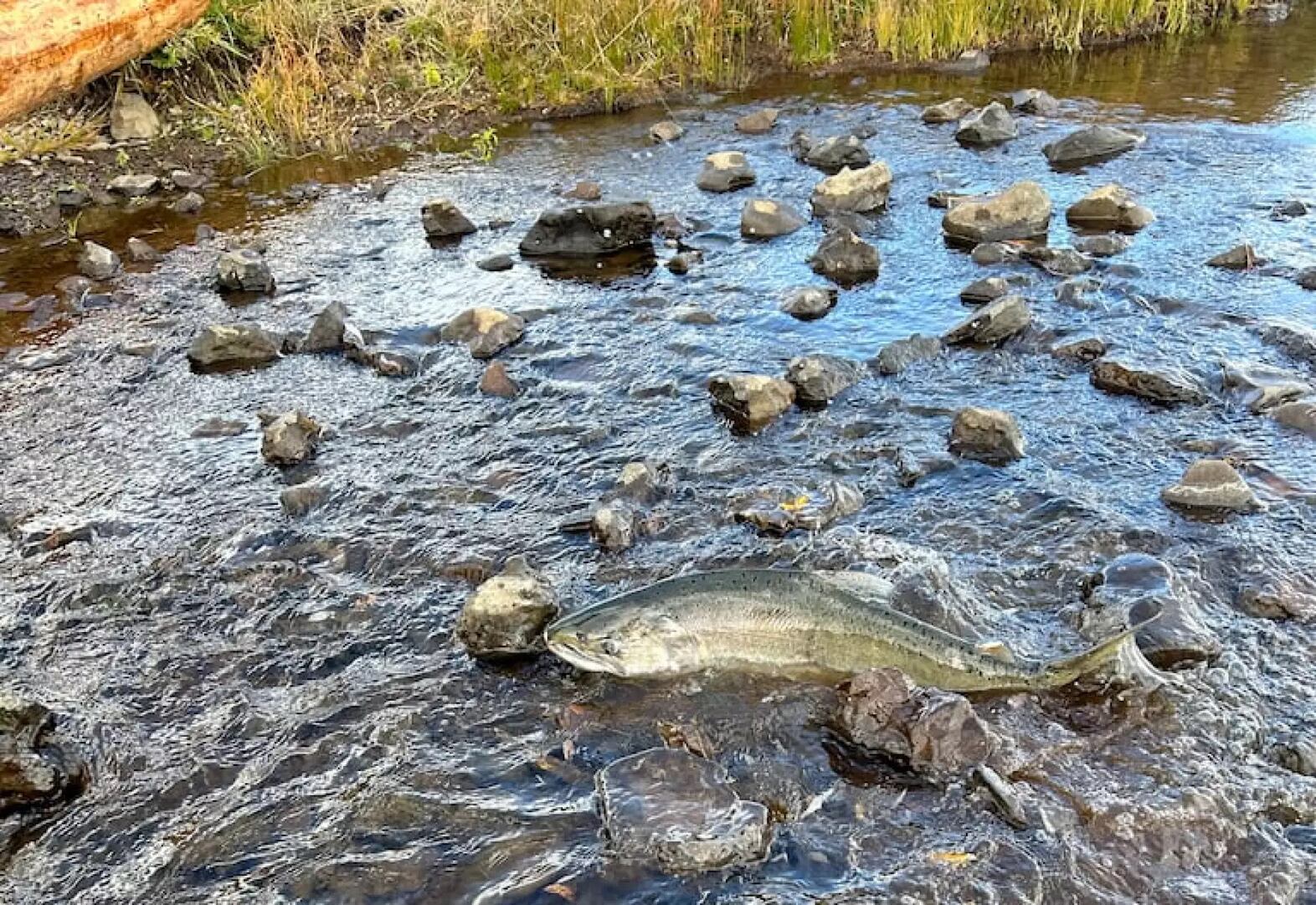
For over a century, salmon swam hundreds of miles upstream only to hit a giant wall in California’s Klamath River. But now, the river is open again!
After four dams were removed in 2024, Chinook salmon are returning to places they couldn’t reach for generations.
After just two migration seasons, salmon have returned to 88% of their historical range!
From Surviving To Thriving
Salmon need healthy rivers to survive, grow, and reproduce. For over 100 years, the Klamath River’s dams prevented them from reaching important habitats like cold-water streams.
The dams also changed water conditions, leading to disease -- in 2002, more than 33,000 adult Chinook were killed in a single event. Such devastating events like that one helped stimulate action to remove the dams.
Removing the dams gives salmon access to more places to find a suitable habitat. It could also help fish handle a warming climate by reconnecting them with colder streams.
The study is a remarkable example of how quickly nature can recover when given the right opportunities. With Chinook salmon returning to their habitats, scientists are hopeful for the return of other species to the area as well, such as the ecologically crucial spring-run Chinook, which keep the waters diverse.
The Road To Revival

In a remarkable show of teamwork, scientists, government agencies, and conservation groups partnered with tribal nations who led a long-term movement to remove the dams and study the river’s recovery. Notably, the Karuk Tribe, Klamath Tribes, and Yurok Tribe helped lead research alongside CalTrout, the USGS, and researchers from Caltech, MIT, and UMass Amherst.
Researchers developed new ways to monitor the river’s recovery. Scientists used artificial intelligence and underwater sonar to efficiently count and identify salmon.
USGS researchers also implanted tiny acoustic tags into young salmon and tracked them at eight listening stations, letting them learn where the salmon travel and how well they survive.
The results of the reemergence of the Chinook are beyond exciting. Researchers counted around 7,742 salmon passing the site in fall 2024. The following year, that number nearly doubled!
The salmon also gained access to 214 miles of the rivers, going farther upstream than ever. In addition, other species like coho salmon and steelhead have been spotted in the newly opened habitat too.
The work isn’t complete, however. Scientists still need to study how young salmon migrate and survive their trip to return as adults. They are also interested in learning about the effects of the returning salmon on stabilizing their population.
The Klamath River is now recovering, one fish at a time. Its comeback shows the world what can be achieved with teamwork and dedication.
Sources: CalTrout, NY Times, USGS