
In recent years, polar bear attacks have been observed more frequently in the Arctic, from northern Russia to the banks of Canada’s Hudson Bay.
However, scientists point out that the polar bear population is decreasing rather than increasing. Therefore, the increase in their interactions with humans is the result of melting ice caused by climate change that drives them to villages and people’s homes.
When Polar Bears Have Nowhere Else to Go
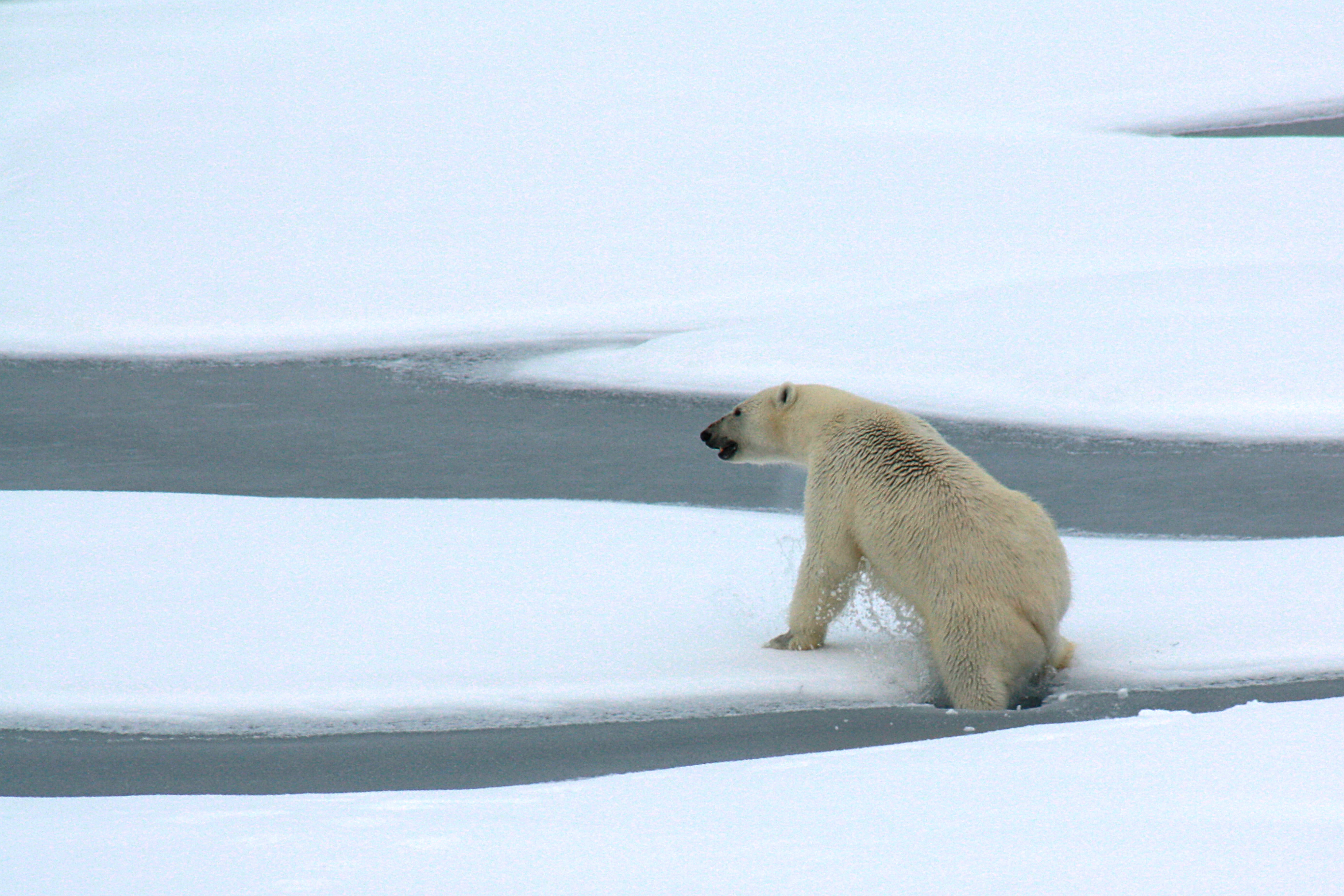

In fact, moving to the shore is inevitable and a helpless choice for polar bears.
In September 2026, Arctic sea ice reached its annual minimum of 4.6 million square kilometers. This is the tenth-lowest since satellite recordings of sea-ice minima began in 1978, according to NASA and the National Snow and Ice Data Center.
Arctic residents had long defended themselves against polar bears. The situation often ended up with the hunter killing bears that seemed to pose a threat to the community. The fact that hunters made a profit also complicated this issue. A polar bear pelt can be sold for $5000.
The Nunavut government currently allows an annual allowable take of between 400 and 500 polar bears. Of course, killing bears in defense counts toward this quota, meaning that every sick or abnormal polar bear is a loss in profits.
How Arctic Communities Are Responding
The more humans expand their activities across the Arctic—for research and habitation—the less polar bears have space to roam around.
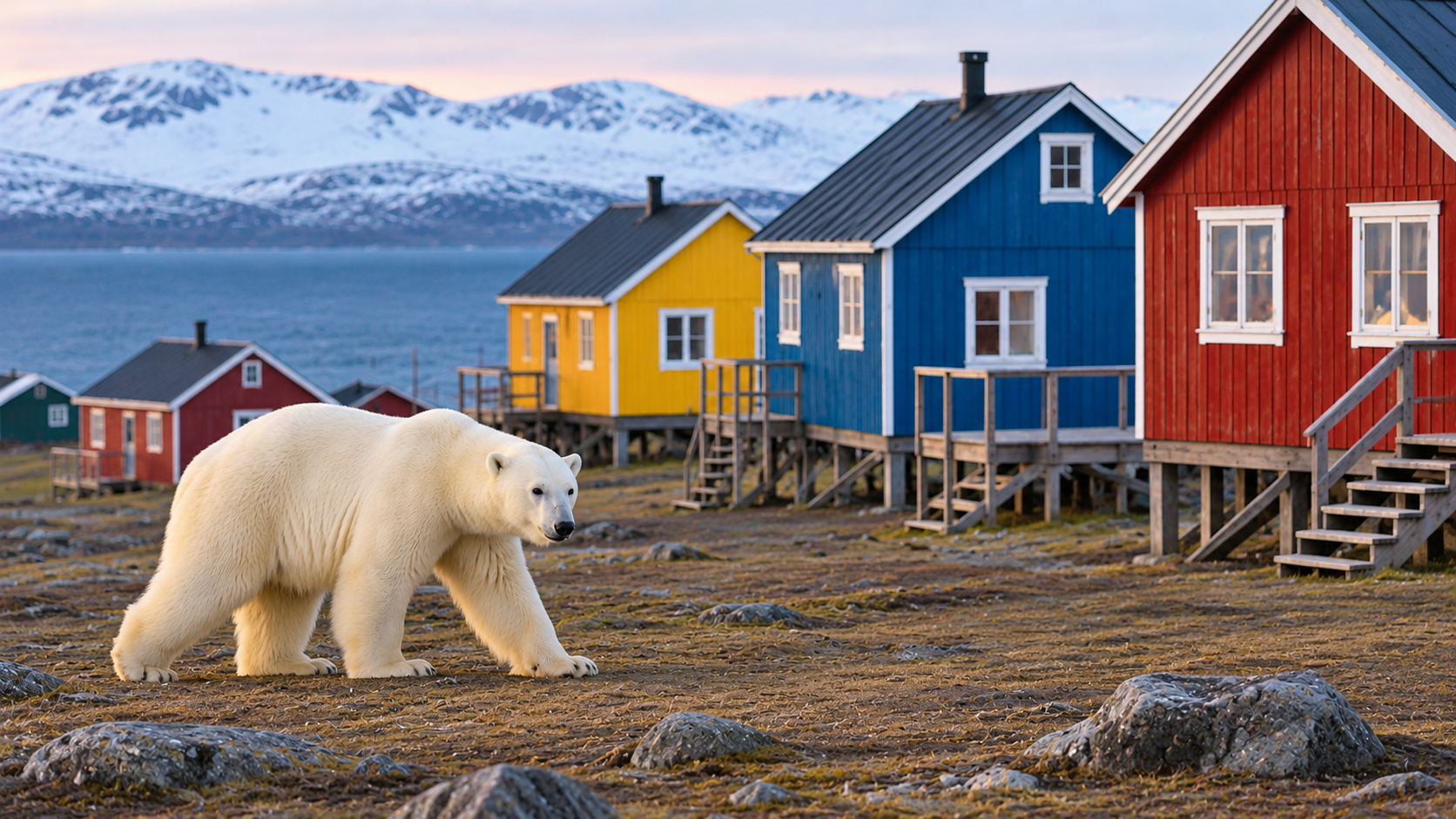
Some villagers express that they are building an unspoken agreement with the bears—humans do not disrupt the bears' foraging, and the bears do not come to the village.
Residents of Hudson Bay are leaning on technology. Bear-dar is an artificial intelligence-assisted radar system designed to detect approaching polar bears and provide communities with early warnings before encounters escalate.
Inuit communities in northern Canada are responding by training residents as bear guards to protect both people and wildlife. In Nunatsiavut, Inuit elder Derrick Pottle established BearSafe Planning, a program that teaches residents to recognize signs of threatening bear behavior and how to respond safely.
Similarly, in northeastern Russia, residents are responding to increasingly frequent polar bear encounters by establishing polar bear patrols that protect communities while minimizing harm to the animals.
Instead of wiping out all threats, these approaches emphasize harmony among humans and prevention of violence. Furthermore, we should aim to mitigate climate change and global warming so that polar bears can go back home.
Sources: Yale, NSIDC, WWF, Grist