
What's That Black Spot On The Sun?

Stargazers were in for a treat yesterday, November 11,  as they watched the planet Mercury glide across the face of the Sun. 

The planet appeared as a tiny spot and could be viewed with special glasses, telescopes, or high powered binoculars fitted with solar filters. This rare celestial event took 5.5 hours and was visible during the day in North America (east coast), Europe, South America, and Africa. 

Tags

A Global Atlas Of Earthworms

Think back to six or seven years ago: you are in the garden, flipping stones and digging, looking for creepy bugs. And you come across pink, tube-shaped crawlers–earthworms!

Maybe you didn’t realize it then, but earthworms are incredibly important to the environment; so important, that scientists have created an earthworm atlas to keep track of them! 

Deadly Fungus Found In Australia

Poison fire coral, a deadly mushroom thought to be native only to Japan and Korea, was discovered in Queensland, Australia by Ray Palmer, a nature photographer.

This mushroom is true to its name. Not unlike cartoon orange flames, poison fire corals are incredibly lethal, producing at least eight toxic compounds that can be absorbed through the skin. Eating the mushroom can be fatal, and even touching it can cause the skin to redden and swell.

Tags

Hurray For Rechargeable Batteries!

Have you ever wondered how the electronics you use every day are powered so effectively?
On October 9, three researchers received the Nobel Prize in Chemistry for their groundbreaking invention, the lithium-ion battery.

Stanley Whittingham, John Goodenough, and Akira Yoshino spent decades overcoming obstacles to perfect the technology we take for granted.

A Feud With California

Beautiful coastlines, redwood forests, Hollywood, Silicon Valley... California is a much sought out destination.

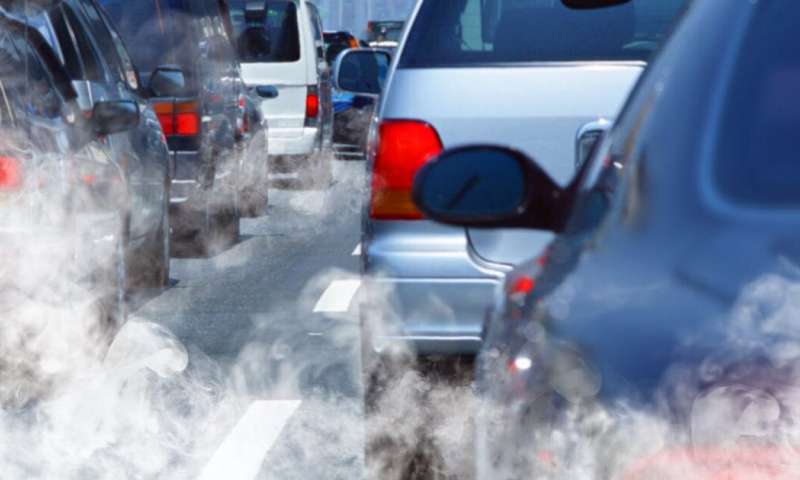
The state also has a reputation for leading the country in climate policies. But, California has recently come under fire by the EPA (Environmental Protection Agency), or more specifically, President Donald Trump. 

A Success for The Ocean Cleanup!

The infamous "Great Pacific Garbage Patch" is just that -- a huge floating patch of garbage in the middle of the Pacific Ocean.

The patch is estimated to be about 1.6 million km2, about twice the size of the U.S state of Texas. The garbage debris is a result of land-based activities in North America and Asia and sea pollution from ships, boats, and oil rigs. Much of the pollution is composed of plastic which does not break down completely.

Drones Track Whales!

Imagine you were a marine biologist. How would you measure the size of a whale? How would you count how many whales there are in the ocean?

Capturing live whales and bringing them out of the ocean without harming them is cumbersome. After all, they are the biggest creatures that currently live on our planet.

As for counting the population, not only is the ocean vast, but it’s not easy to track every whale. So far, only dead or stranded whales have been measured; however, these results are not accurate as death can cause bodies to bloat or reduce in size. 

U.N Report: Our Earth's Oceans And Ice

The open sea, the Arctic, and the Antarctic may seem distant in our daily lives.

But did you know that these areas are responsible for regulating the climate around the world? In fact, we significantly depend on them for food, water, transportation, and biodiversity.

Two weeks ago, the United Nations released a climate report that discussed the effects of climate change on these crucial areas of Earth: the ocean and the cryosphere (frozen parts of Earth, like snow, glaciers, and ice caps). Let’s see what they discovered.

Details of the Report

Where Have The Birds Gone?

The sky has been getting quieter and quieter for the past few decades, but not many have noticed.

A recent report published in Science confirmed the news that environmentalist Rachel Carson predicted in her book Silent Spring over 50 years ago - an astronomical decline in bird populations across North America. 

According to the journal, the population of birds in the US and Canada has dropped by 29% since 1970 - with an overall drop of 2.9 billion birds from half a century ago.