
Every two years, the world comes together to watch the Olympics, where history is made. This year, the 2026 Winter Olympics took place in Italy’s Milan and Cortina d’Ampezzo.
Across eight different sports and 116 medal events, millions tuned in to watch Alysa Liu return to the rink from her 2022 retirement, where she performed to Pink Pantheress’ Stateside. Liu walked away with a big win for Team USA, becoming the first American woman to win gold in figure skating since Sarah Hughes in 2002.
While athletes celebrate their achievements, scientists and Olympic organizers are starting to ask: Will there still be enough cold places to host the Winter Olympics in the future?
Where and when have the Olympics been hosted?
Through its 102-year existence, more than 20 different cities, from Vancouver, Canada, to PyeongChang, South Korea, have hosted the Winter Olympics.
Traditionally taking place in February, the games have been held in cities located in famous mountain ranges. These were ideal hosting locations because of their reliable snow and mountains, perfect for skiing and snowboarding events. Surprisingly, the site of the 2034 Olympics, Salt Lake City, saw only 0.1 inches of snow in January, a shocking 30 inches below average. Scientists wonder whether winter conditions will continue to support the Games.
A Warming Climate Creates New Challenges
Changes in weather patterns are attributed to the warming of Earth’s atmosphere through a process called global warming. The lack of snowfall and consistent winter conditions creates uneven terrain, slippery slopes, and low-quality ice, making it harder and more dangerous for athletes to perform.
Scientists project that by 2050, only 52 of the 93 potential hosts would have suitable climates for the Winter Olympics, and only 22 of these would be for the Paralympics. Only four locations, Niseko, Japan; Terskol, Russia; and Val d’Isere and Courchevel, France, would be able to host with natural snow.
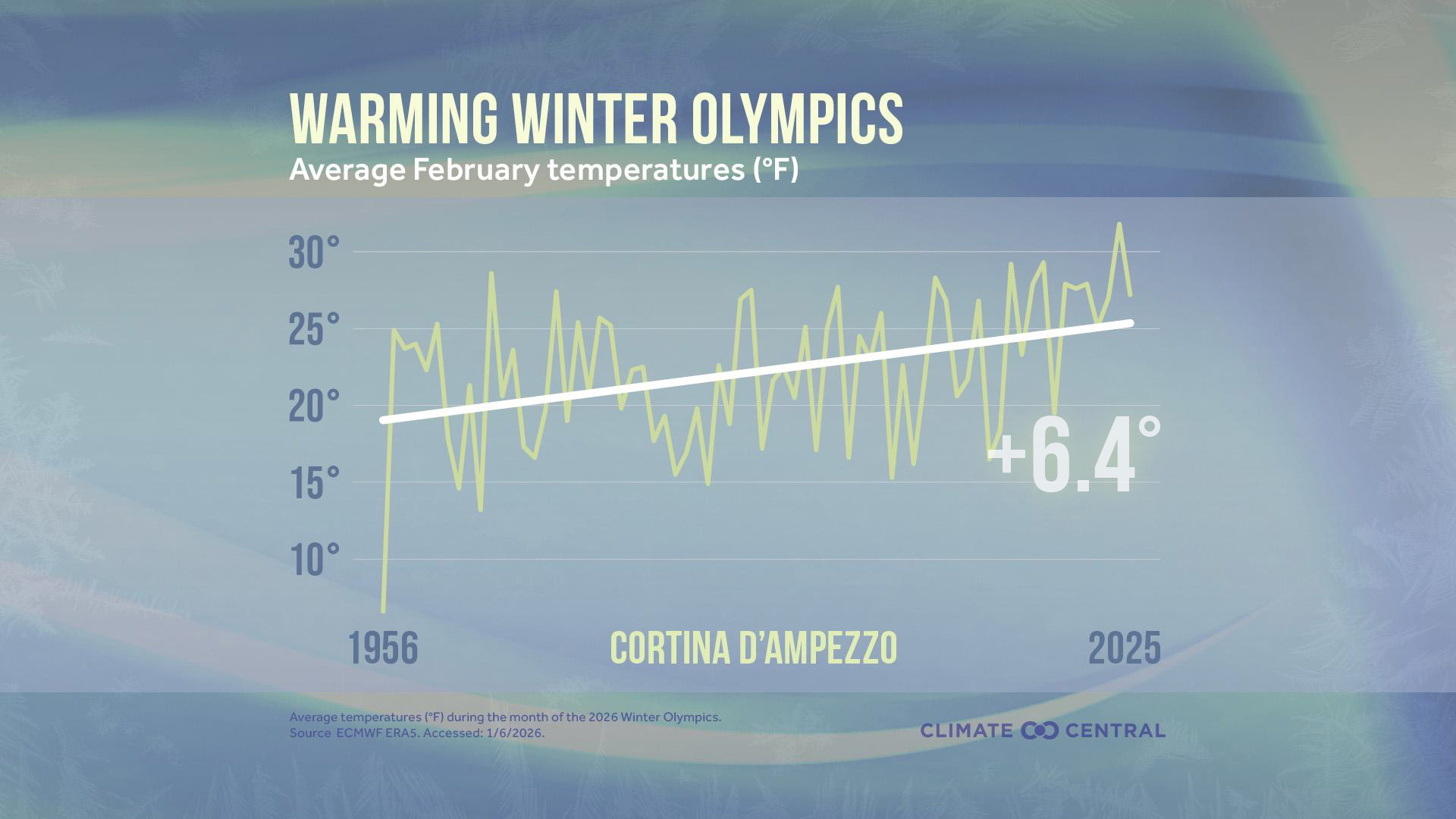
This year, the Milan Cortica Games struggled as the Italian Alps’ temperature was 6.4°F higher than when it was previously hosted in 1956. The below average snowfall and above average temperatures had snowmachines on overdrive to pump out nearly 2.4 million cubic meters of snow in preparation for the Games. However, producing fake snow requires too much energy and water to be sustainable and is bad for the environment. Billions rely on real snow for drinking water, farming, and generating hydroelectric power, but snowfall has declined in the past century.
Looking To The Future
Despite the many concerns that scientists have, the future of the Winter Olympics is not necessarily in danger. Colder cities located in higher altitudes with reliable winter conditions may still continue to host the Games. Organizers also look for new ways to adapt, such as scheduling events earlier in the winter or choosing colder and snowier climates.
The Winter Olympics have always been a celebration of winter sports; however, it also serves as an important reminder to the world of the impacts of global warming. It is important that the world bands together to combat this posing threat. With careful planning and new technology, future generations may still be able to experience this magical tradition.