
A Colorless Great Barrier Reef

Did you know that the Great Barrier Reef is the only living thing visible from space?

Located off the coast of Queensland Australia, it is the world's largest reef system, stretching over 1800 miles.

This amazing reef, considered one of the seven wonders of the natural world, is home to nearly 400 different species of corals and over 1,500 different types of fish.

However, scientists are concerned that the corals in the Great Barrier Reef are dying. Let’s find out why.

What Are Coral Reefs?
Spring Comes Early In The US

Normally folks mark March 21st as the first day of spring, also known as the vernal equinox

But spring is already appearing down the coast of California, Nevada, Colorado, and central Kansas, as well as in Missouri, Illinois, Indiana, and Ohio. The east coast including the Virginias and Philadelphia are also seeing an early onset of spring this year.  

Scientists have known for years and years that climate change is advancing the start of spring in the United States. But how do they figure out the start of spring?

Honey Bee Crisis: Can Drones Help?

If the bee disappeared off the face of the Earth, man would only have four years left to live.”

Even though the source of this quote is not clear, the warning holds true. Many of nature’s pollinators: bees, butterflies, bats, are endangered. Honey bees which are responsible for 80% of pollination that happens in our world, are in the most danger. 

Pollinators are vital to humans’ survival. Without pollinators to complete these tasks, apples, mangos, palm oil, alfalfa, cacti, and many other plants would disappear.

Those Carnivorous Pitcher Plants!

Imagine this: you are a fly buzzing around a kitchen. On the window sill, you see a green plant. It catches your attention, and the sweet smell lures you closer. Hungry, you reach for the sweet liquid, but with a chomp, you are eaten by the plant!

Does this scenario seem impossible to you? Well, such plants do exist, and you have just become a victim of the pitcher plant.

What are these fascinating pitcher plants and how did they develop their unique meat-eating habit? Let's find out.

Trapping Its Prey

Tags

Bison Roam Again In Canada's Banff

"Oh give me a home, where the buffalo roam, Where the deer and the antelope play..."  The words of this western folk song written in the early 1870s became the anthem of the wild American West.

Unfortunately, bison have since disappeared from many parts of North America. It has been more than 130 years since wild bison roamed the plains of Canada's oldest National Park. But all that is about to change. 

Capturing Florida's Burmese Pythons

Florida’s Everglades National Forest is known for its rich wildlife. From the white ibis to the white-tailed deer and the Florida panther, many animals are found in this unique and diverse wetland ecosystem.

Unfortunately, these animals' habitat is fast disappearing. Humans are responsible for draining the Everglades swamps and endangering nearly seventy-three species of animals.

However, a decade ago, it was discovered that another culprit had started destroying the ecosystem - Burmese pythons!

An Invasive Species

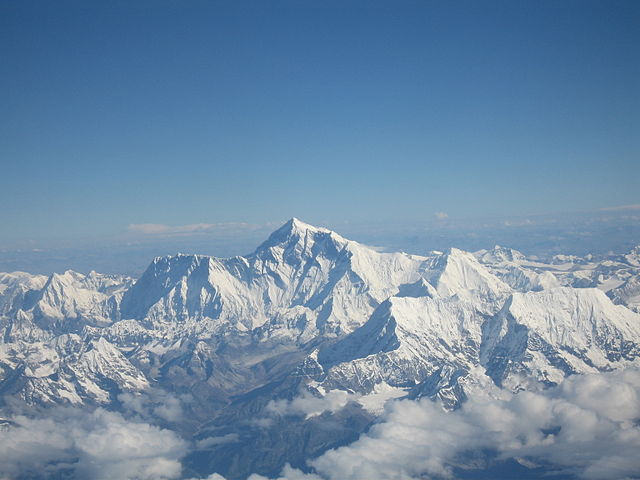
Has Mount Everest Shrunk?

When asked to imagine the world’s tallest mountain, which one comes to mind? Most people immediately think of Mount Everest, which at a whopping 29,029 ft (8,848 meters), is indeed the tallest mountain.

But what if I told you that there is a chance that this legendary mountain has actually shrunk in size? Yes, you heard it right!

Those Amazing Desert Ants!

When you are traveling to a new place, isn’t it convenient to use the GPS on your phone to find the route to your destination? 

Several insects often travel to faraway places in search of food, using a different route every day. Do you ever wonder how ants find their way so easily to the uncovered food in your kitchen? They definitely don’t have a GPS helping them out.

The World's Largest Carbon Storehouse

Scientists have discovered a huge pool of carbon in a central African peat swamp that nobody knew about before!

The Cuvette Centrale peatlands in the central Congo basin is believed to be the world’s largest peatland system and the region’s most important carbon sink. Carbon sinks are forests, oceans, or other natural locations that have the ability to absorb carbon from the atmosphere.