
Why Pandas Love Horse Poop!

Imagine you’re hiking in the mountains admiring the trees and birds, reveling in harmony with nature. Splat! You accidentally land your brand new sneakers into a pile of horse dung. Revolting, isn’t it? 

Believe it or not, while feces may seem extremely repulsive to humans, pandas deliberately smear themselves with generous helpings of horse scat!

Let’s take a look at this bizarre panda behavior and the science behind it.
A Treasure Trove Of Ice Age Paintings!

Imagine tens of thousands of paintings lining rocks across the hills.

Scientists found this exact scene in the Amazon, with prehistoric paintings spanning across eight whole miles!

This discovery is one of the largest collections of prehistoric art ever in the Colombian Amazon. It was created during the Ice Age and is over 12,600 years old.

The people who drew the paintings used a reddish mineral pigment called ochre, which does not wash away or disappear. As a result, the artwork is preserved very well, and in fact, is highly detailed for such an ancient work.

Tags

¿Cómo podemos prevenir la sobrepesca?

Imagínese un mar desolado, cubierto de algas y vacío de toda vida, con corales ahogados que se desmoronan bajo la superficie. Esto suena como algo salido de una película apocalíptica, ¿verdad?

Sin embargo, la verdad es que, con la sobrepesca y el aumento de las temperaturas globales, esta situación de pesadilla es igualmente probable en la vida real.

Entonces, ¿qué es la sobrepesca y qué podemos hacer para ayudar a prevenirla? Vamos a sumergirnos de inmediato.

¡Los ornitorrincos brillan en la luz!

Como si poner huevos como mamíferos y tener espinas venenosas no fuera suficiente, los científicos han descubierto otro rasgo inusual de los ornitorrincos: ¡pueden brillar!

Aunque no son luces nocturnas, los ornitorrincos exhiben un tono azul verdoso cuando se ilumina su pelaje con una luz ultravioleta (UV), un fenómeno conocido como biofluorescencia.

En un estudio publicado en la revista Mammalia, los científicos descubrieron esta extraña característica en tres especímenes del ornitorrinco de Tasmania, Australia.

How Can We Prevent Overfishing?

Imagine a desolate sea, smothered in algae and empty of all life, with choked corals crumbling beneath the surface. This sounds like something out of an apocalyptic movie, right? 

The truth is though, with overfishing and global temperatures on the rise, this nightmarish situation is just as likely in real life.

So what is overfishing, and what can we do to help prevent it? Let’s dive right in.

Platypuses Glow In The Light!

As if laying eggs as mammals and having venomous spines was not enough, scientists have discovered another unusual trait about platypuses - they can glow!

Although they are no night lights, platypus exhibit a greenish-blue hue when an ultraviolet (UV) light is shined on their fur, a phenomenon known as biofluorescence.

In a study published in the journal Mammalia, scientists discovered this strange characteristic in three specimens of the platypus from Tasmania, Australia.

¿Se están haciendo más fuertes los tifones?

¿Puede ocurrir un desastre dos veces? Desafortunadamente, ese parece ser el caso de Filipinas en Asia y el país centroamericano de Guatemala.

Con vientos de más de 195 mph, el Super Typhoon Goni se convirtió en la tormenta más fuerte que jamás haya golpeado tierra en Filipinas. Ahora, menos de dos semanas después, el tifón Vamco ha golpeado la parte norte del país, cortando el suministro eléctrico a millones de personas y dejando varadas a muchas en sus tejados.

Cómo los mayas descubrieron la purificación del agua

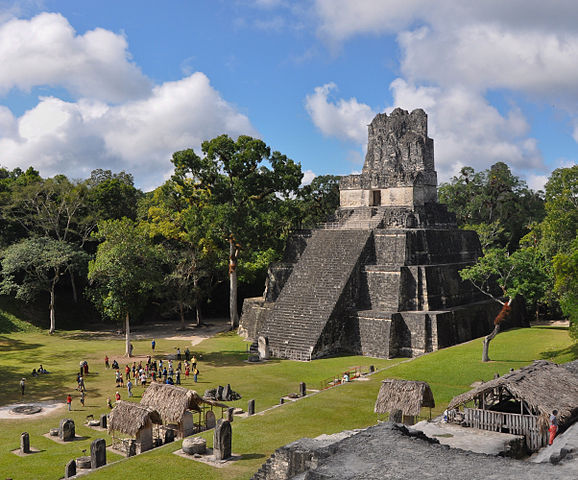
Cuando pensamos en la civilización maya, nos vienen a la mente altas pirámides de piedra. ¡Pero estos pueblos antiguos eran bastante ingenieros!

Recientemente, los científicos hicieron un descubrimiento notable en la ciudad de Tikal en la actual Guatemala. Aquí, encontraron evidencia de un elaborado sistema de filtrado de agua dentro de uno de los depósitos de agua más grandes de la ciudad.

How The Maya Figured Out Water Purification

When we think of the Maya civilization, tall stone pyramids come to mind. But these ancient people were quite the engineers! 

Recently, scientists made a remarkable discovery in the city of Tikal in modern-day Guatemala. Here, they found evidence of an elaborate water filtering system within one of the city’s largest water reservoirs.

Virgin Hyperloop: The Future Of Travel?

Normally, traveling from San Francisco to Los Angeles in California takes 6 hours by car or 1.5 hours by plane.

But imagine if you could travel this long distance in less than an hour without flying! This might very well be the future thanks to a new technology known as hyperloop.

Recently, a company called Virgin Hyperloop completed the first passenger test. The test run took place at Virgin’s DevLoop track in the Nevada desert. The pod reached speeds of 107 miles per hour in 6.25 seconds and covered 500 meters in 15 seconds.

Tags